

Why a Garage Door Shifts to the Left When Opening
AA garage door should glide up and down evenly, but sometimes it starts leaning or pulling to one side. If your door drifts to the left while opening, it is a sign that something inside the system is not working as it should.
If your garage door shifts to the left when opening, the problem usually comes from an imbalance, worn part, or alignment issue inside the system. It may still open and close at first, but uneven movement should not be ignored.
This type of movement can place extra strain on the opener, tracks, rollers, cables, springs, and panels. Over time, that strain can damage the system, make the door harder to use, or create a safety risk.
A heavy garage door that shifts suddenly can injure someone nearby, damage your vehicle, or come off track if the problem gets worse. The safest approach is to understand the warning signs and know when the issue needs professional attention.
In this guide, Door Doctor explains why a garage door shifts to the left, what you can safely check, which fixes are safe to try, and when to call a professional.
Why Is My Garage Door Shifting to the Left?
A garage door usually shifts to the left because one side of the door is rising, lowering, or carrying weight differently than the other side. The system depends on balanced cables, springs, rollers, tracks, hinges, and opener movement.
You may notice the door leaning when it is halfway open. One side may rise faster than the other. You may also hear scraping, grinding, squeaking, or popping sounds as the door moves.
If the door looks badly crooked, gets stuck, jerks suddenly, or has a loose cable, stop using it. These signs can point to a problem that may get worse if the opener keeps forcing the door to move.
What an Uneven Garage Door Really Means
A garage door is designed to rise and lower in a balanced way. Both sides should move together so the panels stay straight and the bottom edge meets the floor evenly. When everything is aligned, the door feels steady, and the opener does not have to struggle.
If your garage door is shifting to the left, you may notice a few clear signs. The most obvious one is a visible tilt when the door is halfway open. Sometimes the bottom corner on one side touches the ground while the other side hangs above it.
You may also hear unusual sounds as the door moves. Scraping, squeaking, grinding, or popping noises can point to worn parts, poor alignment, or extra strain inside the system. Another warning sign is slack in the cables on one side or rollers that do not sit squarely in the track.
Not every uneven movement is an emergency, but it should never be ignored. A small tilt can be the first warning that a cable is wearing out, a spring is losing tension, or a roller is beginning to fail.
Stop Using the Door If You Notice These Signs
Stop using the garage door and call a technician if the door is visibly crooked, stuck halfway, making loud popping sounds, or showing a loose cable. You should also stop using it if one side drops faster than the other or the opener sounds like it is straining.
These signs usually mean the door is unbalanced or a key part is failing. Continuing to run the opener can damage the tracks, rollers, cables, springs, or opener motor.
Do not try to force the door open or closed. A crooked garage door can shift suddenly, come off track, or place dangerous tension on parts that are already damaged.
Common Causes of a Garage Door Shifting to the Left
When a garage door leans to the left or right side, the problem usually traces back to one of a few familiar trouble spots. Below are the most common reasons this happens and how each one affects the way your door moves.
1. Cable Issues
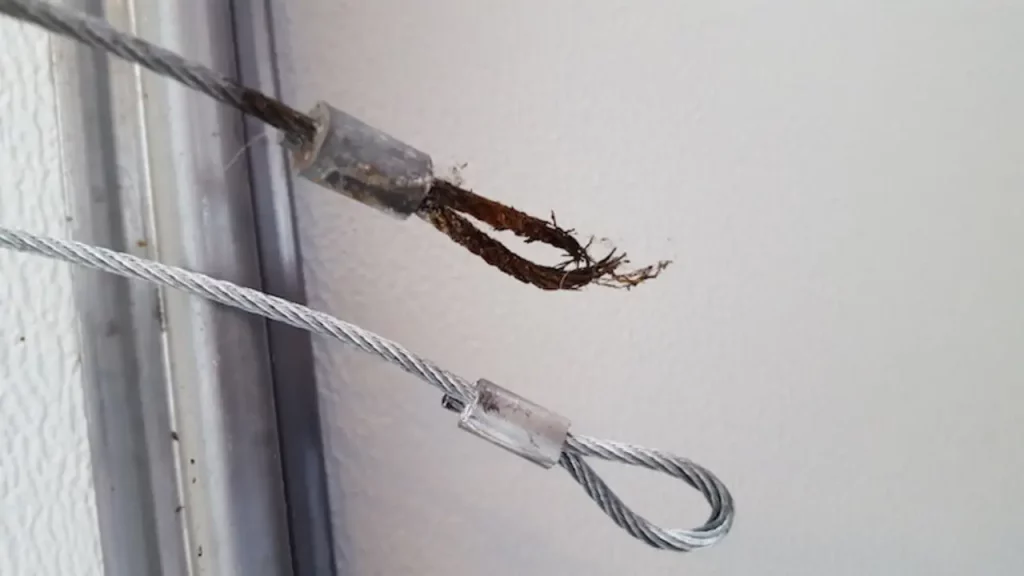
Garage door cables play a key role in keeping both sides of the door in sync. If a cable is frayed, stretched, loose, or completely broken, one side of the door will carry more weight than the other.
This imbalance often shows up when the door starts leaning to one side. A failing cable may hang slack, look uneven compared to the other side, or come loose from the drum.
Do not try to repair or adjust garage door cables yourself. Cables are under heavy tension and should only be handled by a trained garage door technician. If the issue looks like a cable problem, professional garage door cable repair is the safest next step.
2. Spring Tension Imbalance
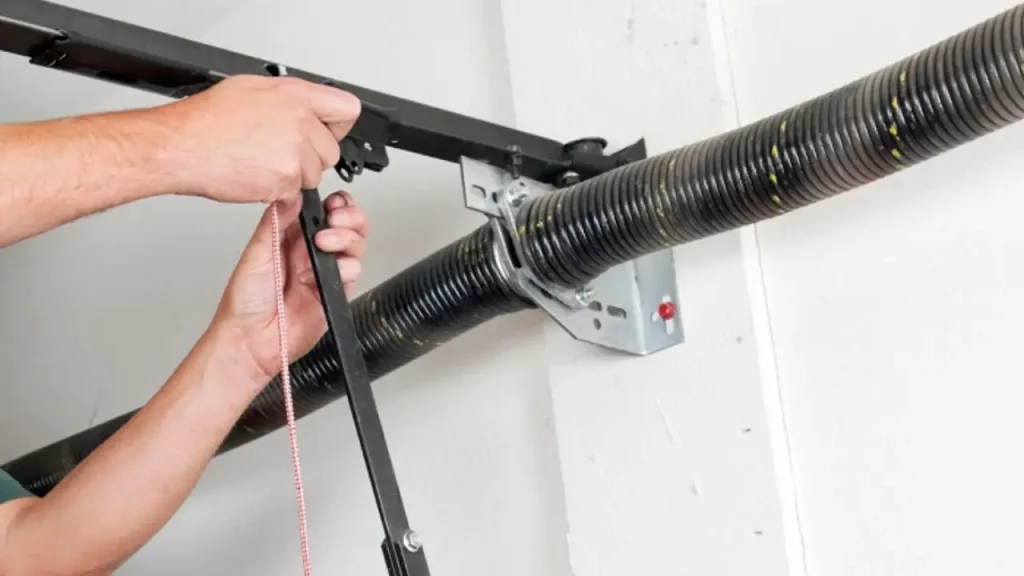
Garage doors rely on heavy springs to offset their weight. Torsion springs sit above the door, while extension springs stretch along the sides. If one spring weakens or breaks, the door loses balance and may shift to the stronger side.
Signs of uneven spring tension include jerky movement, a door that feels heavier than normal, or one side rising faster than the other. You may also hear a loud bang if a spring breaks.
Do not touch or adjust garage door springs yourself. Springs carry dangerous tension and can cause serious injury without the right tools and training. If you suspect a spring issue, schedule professional garage door spring repair.
3. Misaligned or Bent Tracks
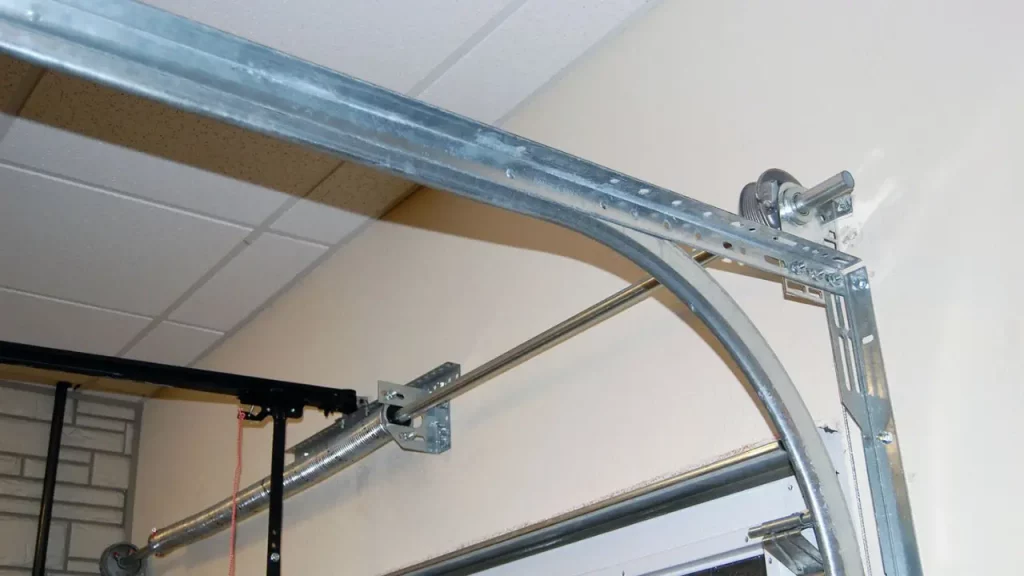
Garage door tracks guide the rollers as the door moves. If dirt, dents, loose brackets, or small obstructions get in the way, the rollers may slip, drag, or bind.
Bent tracks can tilt the rollers and force the door off balance. Even a small bend can cause the door to lean left during operation.
If the track looks damaged or the door is rubbing hard against one side, avoid using the opener until the system is inspected. A technician can check whether the door needs garage door track repair, realignment, or another fix.
4. Worn or Broken Rollers
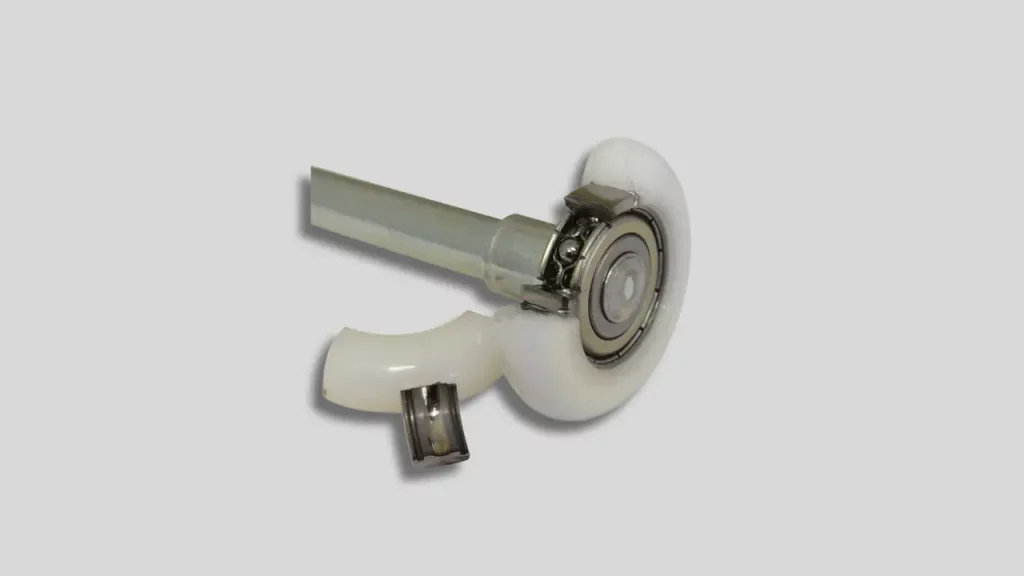
Rollers allow the door to glide smoothly along the tracks. When rollers are cracked, worn, loose, or broken, they stop moving evenly.
A worn-out roller may drag, wobble, or pop out of alignment. This can cause one side of the door to lag behind and make the door shift to the left.
Replacing damaged rollers can often restore smoother movement before the problem damages the track, opener, or panels.
5. Loose or Damaged Hardware
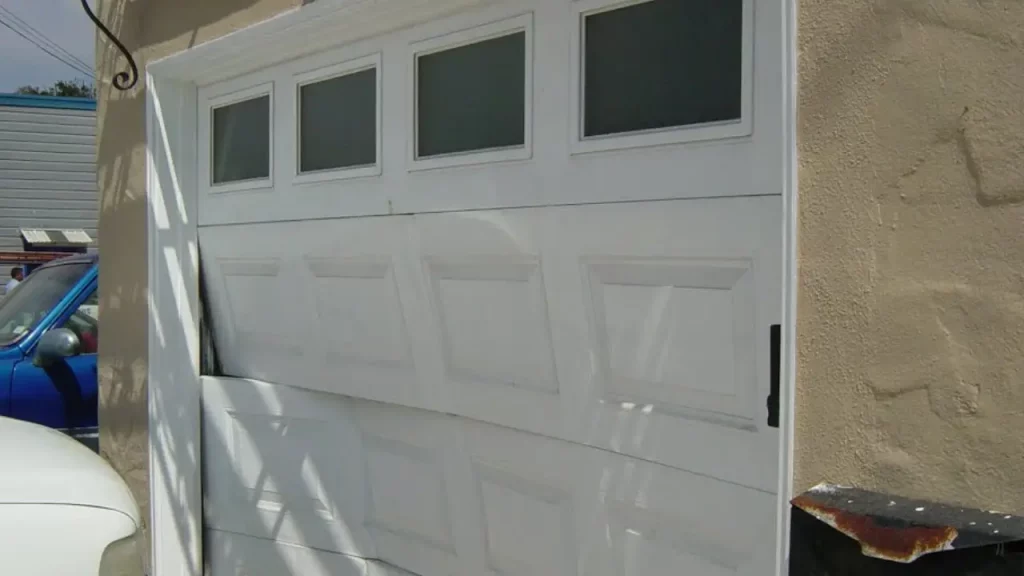
Hinges, brackets, fasteners, and other hardware keep the door panels connected and aligned. If these parts loosen or wear out, the door can wobble and tilt as it moves.
Even one loose hinge can create enough play for the door to pull to one side. You may hear rattling or see the panels shift slightly during operation.
Simple loose screws may be safe to tighten, but do not adjust brackets connected to cables, springs, or bottom fixtures.
6. Poor Installation or DIY Mistakes
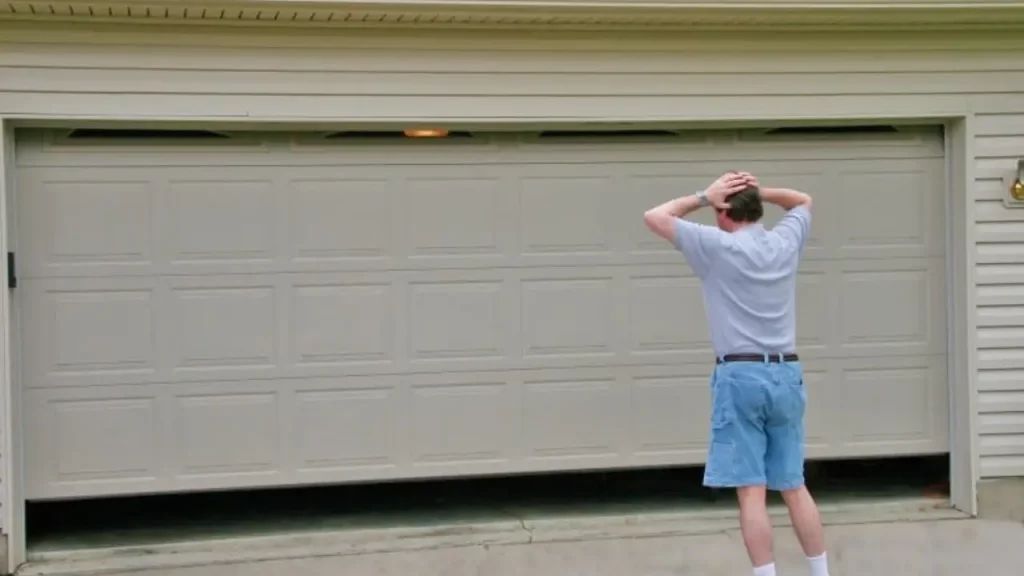
If a garage door is not leveled correctly during installation, uneven movement can show up later. Using the wrong spring size or setting the tracks unevenly can also throw off the balance.
Sometimes quick DIY repairs make the issue worse. Parts may be tightened unevenly, installed in the wrong position, or adjusted without checking the full door system.
If your garage door has shifted since installation or after a recent repair, a professional realignment may be needed.
Other Reasons a Garage Door May Lean to the Left
Opener or Drive System Problems
The opener does more than lift the door. It also affects how smoothly the door moves through each cycle.
If the chain or belt on the drive system pulls unevenly, one side can appear to move faster than the other. Incorrect force or travel limit settings may also cause the door to stop unevenly.
The opener should not be used to force a crooked or unbalanced door. The door should be properly balanced before the opener does the lifting. If the opener is straining or stopping unevenly, garage door opener repair may be needed.
Debris, Rust, or Weather-Related Issues
Weather and debris can affect garage door movement. Dirt, leaves, small stones, rust, or ice buildup can block one side of the track and cause the rollers to drag.
Moisture and humidity can also make metal parts stiff or corroded. When one side of the system moves slower than the other, the door may begin pulling to the left.
Keeping the tracks clean and the moving parts lubricated can help reduce these issues. Regular garage door maintenance can also catch worn parts before they affect the balance of the door.
Structural or Framing Issues
Sometimes the problem is not with the door itself. A sagging header above the garage opening, uneven floor, damaged framing, or natural settling can affect how the door sits and moves.
This is more common in older garages or homes with visible settling around the opening. If the frame is no longer square, the door may need professional adjustment or replacement.
How to Check a Garage Door That Is Pulling to the Left
Before trying any fix, watch how the door moves from a safe distance. Look for obvious signs of uneven movement.
- Open and close the door slowly. Notice if one side rises faster, if the bottom edge tilts, or if the door gets stuck at certain points.
- Look at the cables without touching them. If one cable looks loose, frayed, longer than the other, or out of place, stop using the door and call a technician.
- Check the tracks for dirt, dents, loose brackets, or anything blocking the rollers. The rollers should sit properly inside the tracks without wobbling or rubbing hard against one side.
- Watch the chain or belt while the door moves. If it jerks, strains, or pulls unevenly, the opener may be part of the problem.
- Listen for grinding, scraping, squeaking, or popping noises. These sounds can point to worn rollers, loose hardware, track problems, or spring tension issues.
- Look at the springs from a safe distance. If one spring looks stretched, broken, separated, or uneven compared to the other, do not touch it. Call a professional.
Safe Troubleshooting Steps You Can Try
Some minor problems can be checked at home with care. Stay away from springs, cables, drums, and bottom brackets.
You can clean debris from the tracks when the door is fully closed. Remove dirt, leaves, small stones, or buildup that may be blocking the rollers.
You can lubricate the rollers, hinges, and other moving metal parts with a garage door lubricant. Avoid using heavy grease inside the tracks because it can attract more dirt.
You can tighten simple loose screws or bolts on hinges and track brackets if they are easy to reach and not connected to tension parts. Tighten gently and do not force anything.
You can test the balance manually only if the door is not visibly crooked, stuck, or unsafe. Disconnect the opener by pulling the release cord, then lift the door by hand. A balanced door should stay in place when raised halfway. If it drops quickly, feels heavy, or shifts, stop and call a technician.
You can also check the opener settings if the door itself appears balanced. If the opener stops too soon or continues pulling after the door is fully open, the travel limits may need adjustment. Follow the manufacturer’s instructions or call a professional if you are unsure.
Important Safety Note
Do not attempt to fix or adjust garage door springs, cables, drums, or bottom brackets on your own. These parts hold extreme tension and can cause serious injury if handled without the right tools and training.
Do not keep running the opener if the door is crooked, stuck, or pulling hard to one side. The opener can force damaged parts to move and make the problem worse.
If the issue involves a loose cable, broken spring, bent track, worn roller, or opener strain, scheduling professional garage door repair is the safest next step.
When to Call a Garage Door Technician
Call Door Doctor if your garage door shifts left every time it opens, looks crooked, gets stuck, or makes loud popping, scraping, or grinding sounds. These signs can point to a cable, spring, roller, track, or opener issue that needs professional repair.
You should also call for service if the door is heavy, jerky, off track, or showing signs of a loose cable or broken spring. A professional can inspect the full system, including the cables, springs, rollers, tracks, brackets, opener, and door balance.
Door Doctor can inspect the door, identify the issue, and complete the right repair so your garage door opens safely and smoothly again.
How to Prevent a Garage Door From Shifting Again
Regular maintenance can help keep your garage door balanced and reduce the chance of uneven movement.
Watch the door open and close once a month. Look for tilting, shaking, dragging, or unusual sounds. Small changes are easier to fix when they are caught early.
Keep the tracks clean and clear. Dirt, leaves, rust, and debris can make one side of the door move slower than the other.
Lubricate hinges, rollers, and moving metal parts as needed. Smooth movement reduces strain on the opener and other parts.
Test the door balance occasionally if the door appears safe to move by hand. A balanced door should stay in place when lifted halfway. If it drops or feels uneven, it needs professional attention.
Schedule a professional inspection once a year. A technician can check spring tension, inspect cables, test the opener, and catch worn parts before they fail.
Long-Term Solutions for a Straight and Steady Garage Door
If your garage door keeps shifting to the left, short-term fixes may not be enough. In many cases, long-term solutions offer better performance and fewer repair problems.
Upgrading worn parts is often the best place to start. Heavy-duty rollers, stronger cables, properly matched springs, and secure hardware can help the door move more evenly.
If the opener is old or pulling unevenly, replacing it may improve performance. A newer opener can provide smoother operation, better safety features, and more reliable movement.
If the door was installed unevenly, a professional realignment can correct the setup and prevent long-term wear. This is especially important for doors that were installed as a DIY project or repaired without checking the full system.
If the door is old, heavy, damaged, or repeatedly needing repairs, replacement may be the better choice. A new garage door can improve safety, operation, insulation, and curb appeal.
Schedule Garage Door Repair With Door Doctor
A garage door that shifts left when opening usually means something is loose, worn, unbalanced, or out of alignment. The issue may come from the cables, springs, rollers, tracks, opener, or hardware.
Do not force the door or keep running the opener if the door looks crooked. Door Doctor can inspect the system, identify the problem, and complete the right repair so your garage door opens smoothly and safely again.
Call Door Doctor today to schedule garage door repair.