
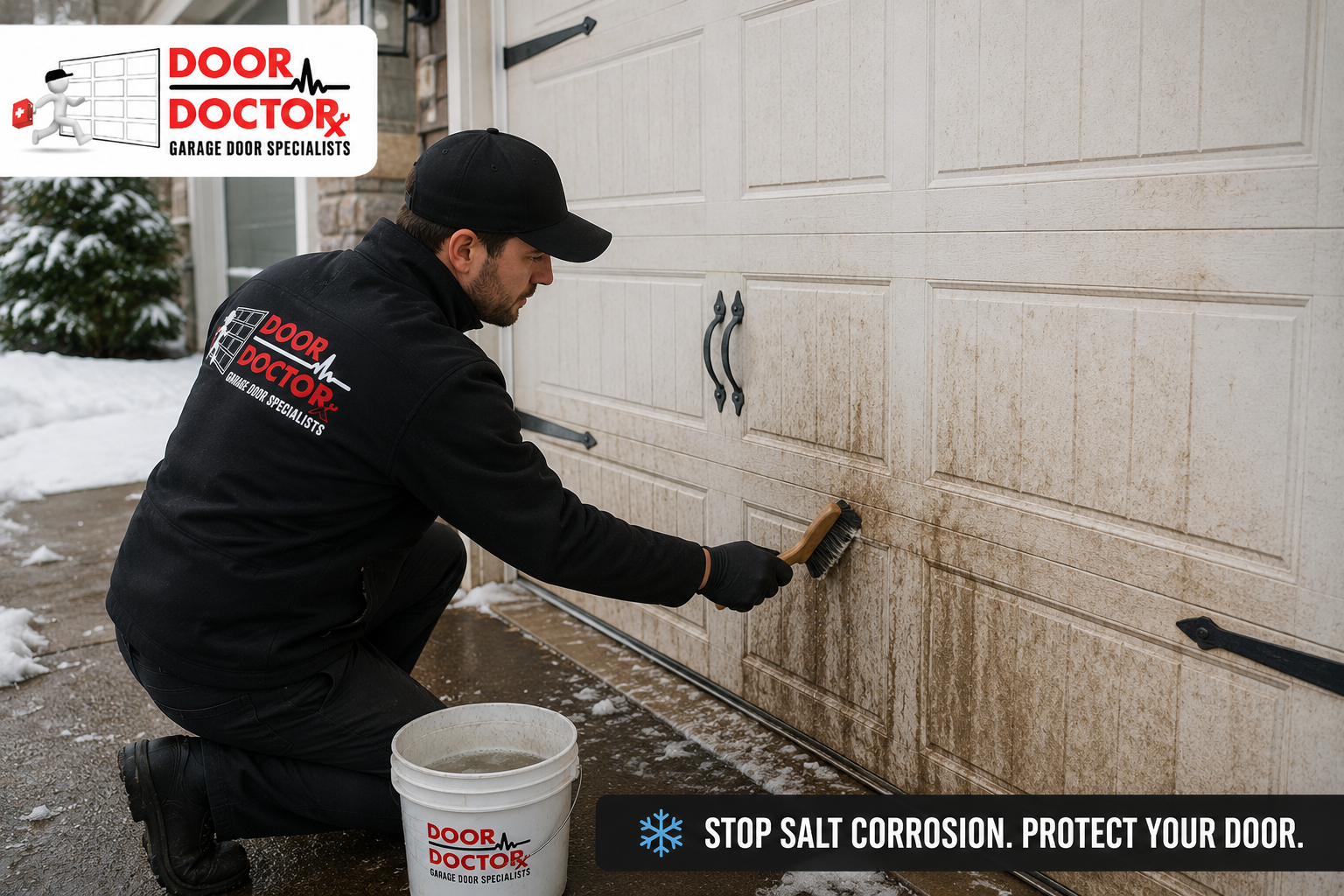
How Do I Stop Road Salt Corrosion on My Garage Door During Northern Virginia Winters?
Quick Answer:
To help stop road salt corrosion, rinse the bottom of your garage door, clean the garage floor near the opening, and check the weather seal, paint, hinges, tracks, and other metal parts during winter. Snow, ice, slush, and salt can wear down paint, rust hardware, damage weather seals, and make the door harder to operate if buildup is left in place. For homeowners in Aldie, Sterling, Ashburn, Leesburg, and nearby Northern Virginia communities, regular cleaning, inspection, and garage door maintenance can help prevent winter damage before it spreads.
How Do You Stop Road Salt Corrosion on a Garage Door?
To stop road salt corrosion on your garage door, rinse the lower part of the door after salt exposure, clean the garage floor near the opening, check the bottom panels for rust, and replace worn weather seals before water gets inside. Salt causes the most damage when it sits on painted metal, exposed hardware, or rubber seals for too long. Keeping the area clean and dry can help prevent rust during Northern Virginia winters. If you already see rust, noisy movement, or seal damage, schedule garage door service before the problem gets worse.
Why Road Salt Damages Garage Doors
Road salt helps melt ice on roads and driveways, but it is hard on garage doors. When salt mixes with moisture, it can speed up rust and corrosion. Your door is exposed to this mixture when salty slush splashes against the lower panels or gets tracked into the garage by your vehicle.
Most corrosion starts near the bottom of the door. This area sits close to driveway slush, standing water, snow piles, and salt residue. You may notice bubbling paint, orange rust spots, rough edges, cracked weather stripping, or rusted hardware near the floor.
Northern Virginia weather can make this worse because winter conditions often change quickly. A storm may bring snow or freezing rain, then warmer temperatures can turn everything into salty slush. That wet and dry cycle gives salt more chances to cling to the door and hardware.
Start With the Bottom of the Door
The lower 12 to 24 inches of the garage door need the most attention during winter. This is where salt spray, snow piles, and driveway slush usually collect.
After storms or heavy salt exposure, rinse the lower part of the door with clean water. A garden hose, bucket of warm water, or soft cloth is usually enough. Use mild soap if there is visible buildup, then rinse the area clean.
Avoid using a pressure washer on a high setting. Too much force can damage paint, seals, trim, or push water into areas where it should not go.
Keep the Garage Floor Clean Near the Door
Salt can damage the inside of the garage too. Your tires bring in snow, slush, and road treatment from local streets and driveways. When that mixture melts, it often collects near the garage door opening.
When the door closes, the bottom seal may sit directly in salty water. Over time, this can dry out the rubber, weaken the lower edge of the door, and allow moisture to reach metal parts.
Sweep or rinse the floor near the door when salt buildup is visible. A floor squeegee can help move water away from the opening. Keeping this area clean and dry is one of the easiest ways to reduce winter corrosion.
Check for Rust, Paint Damage, and Worn Seals
A quick inspection can help you catch corrosion before it turns into a bigger repair. Look along the lower panels, bottom edge, and seal. You are checking for paint chips, bubbling paint, rust spots, cracked rubber, soft metal, or gaps under the door.
Small rust spots are much easier to handle early. Once rust spreads under the paint, it can weaken the panel and make the damage harder to repair. Paint acts as the barrier between metal, moisture, and salt.
The bottom seal is just as important. If it is cracked, stiff, torn, or no longer sits flat against the concrete, salty water can get inside more easily. Replacing a worn seal early helps protect the garage, the door, and the hardware near the floor.
What Common Winter Garage Door Problems Mean
Here is a simple way to understand what you may be seeing during winter. If this table looks too wide on mobile, it can be converted into stacked blocks in WordPress.
| Problem | What It Means | What To Do |
| Rust spots | Salt is reaching exposed metal | Clean, dry, and touch up the area early |
| Bubbling paint | Moisture may be spreading under the finish | Have the panel checked before rust grows |
| Cracked bottom seal | Saltwater and cold air can enter the garage | Replace the seal |
| Noisy rollers or hinges | Corrosion or dryness may be affecting movement | Lubricate or schedule service |
| Uneven door movement | Hardware may be worn, rusted, or under stress | Stop using the door if it feels unsafe and call a technician |
| Water near the door opening | Salt and moisture are collecting where the door closes | Clean and dry the floor area |
Lubricate Moving Metal Parts
Salt and moisture can affect hinges, rollers, springs, brackets, and tracks. When these parts get dry or corroded, your garage door may squeak, grind, shake, or move unevenly.
Use a garage door lubricant on moving metal parts. A light spray made for garage doors usually works better than heavy grease, which can collect dirt and grime.
Apply a small amount to hinges, rollers, and springs, then wipe away any excess. The goal is to protect the parts without creating a sticky surface that holds more debris.
Touch Up Paint Chips Before Rust Spreads
Paint chips near the bottom of the door should not be ignored. Road debris, snow shovels, ice scrapers, and salt can all wear down the finish. Once bare metal is exposed, salt can start causing rust.
If the chip is small, clean the area, let it dry fully, and touch it up with the right exterior paint. Follow the door manufacturer’s guidance when possible. Do not paint over active rust without treating it first.
If you see larger rust areas, bubbling paint, or weak metal, have the door inspected. The issue may be cosmetic, but it could also mean the panel is starting to break down.
Know When Cleaning Is Not Enough
Cleaning helps prevent corrosion, but it will not fix every problem. If salt has already damaged a bottom seal, roller, hinge, bracket, cable, or lower panel, that part may need repair or replacement.
Watch how the door sounds and moves. New grinding, shaking, sticking, or uneven movement can be a sign that corrosion is affecting the hardware. A door that feels heavy or stops partway should be checked right away.
Do not try to repair garage door springs or cables yourself. These parts are under high tension and can be dangerous. A trained technician can inspect the full system and find the safest fix.
Should You Use a Protective Coating?
A protective coating may help some garage doors, especially if the lower panels are exposed to a lot of salt spray. The right product depends on the door material, finish, and current condition.
Before applying anything, make sure the door is clean and dry. Do not cover active rust without treating it first. If you are unsure what product to use, ask a garage door professional so you do not trap moisture or damage the finish.
Winter Garage Door Care Checklist
Use this checklist after snow, ice, or heavy road salt exposure. It gives homeowners a simple way to protect the door, seals, and hardware during Northern Virginia winters.
- Rinse the bottom 12 to 24 inches of the garage door with clean water.
- Wipe the bottom seal with mild soap and water.
- Sweep or rinse salty slush away from the garage door opening.
- Dry the floor area where the bottom seal meets the concrete.
- Check for rust spots, bubbling paint, cracked seals, and exposed metal.
- Listen for squeaking, grinding, shaking, or rough movement.
- Lubricate hinges, rollers, and springs with proper garage door lubricant.
- Schedule service if the door is noisy, uneven, heavy, or visibly damaged.
When to Call Door Doctor
Call Door Doctor if you see spreading rust, cracked weather stripping, loose hardware, noisy operation, uneven movement, or damage near the bottom panels. You should also call if the door feels heavy, stops partway, reverses for no clear reason, or has visible cable or spring damage.
Door Doctor provides garage door repair, garage door maintenance, garage door replacement, and garage door opener service for homeowners in Aldie and throughout Northern Virginia. Our technicians service all makes and models, and we can help identify winter damage before it turns into a larger problem.
Frequently Asked Questions
Yes. Regular maintenance helps protect moving parts, seals, panels, and hardware. It also gives a technician a chance to catch rust, worn rollers, loose brackets, and other winter-related problems early.
Protect Your Garage Door Before Winter Damage Gets Worse
Road salt corrosion is easier to prevent than repair. A little cleaning, inspection, and maintenance can help your garage door last longer through Northern Virginia winters.
If you are seeing rust, worn seals, noisy movement, or winter damage on your garage door, Door Doctor can help. We provide garage door repair, maintenance, replacement, and opener service for homeowners in Aldie, Sterling, Ashburn, Leesburg, and communities throughout Northern Virginia.
Call Door Doctor today at (703) 709-7933 to schedule garage door service and keep your door working safely through the winter.