
Garage Door Maintenance Checklist | Door Doctor VA
Garage Door Maintenance Checklist for Homeowners
Most homeowners should check their garage door about once a month for new noises, uneven movement, damaged seals, blocked sensors, and visible wear. Keep tracks and sensors clean, lubricate only the parts recommended by the manufacturer, and consider a professional inspection about once a year. Door Doctor has served Northern Virginia since 1989, and springs, cables, bottom brackets, balance adjustments, and other high-tension parts should be left to a trained garage door technician.
What Should Be on a Garage Door Maintenance Checklist?
A garage door does not have to stop working before it needs attention. New sounds, changes in movement, or visible wear can be early signs that a part needs maintenance or repair.
Once a month, run the door through one complete opening and closing cycle. Watch for shaking, hesitation, crooked movement, or a sudden change in speed. Listen for scraping, grinding, popping, or rattling that was not there before.
Clear leaves, dirt, and cobwebs from around the tracks and safety sensors without moving or adjusting the tracks. Check the bottom weather seal for cracks, gaps, or daylight, and inspect visible hardware from a safe distance for damaged rollers, frayed cables, loose parts, or a visible gap in a spring.
Lubricate only the moving parts recommended by the garage door or opener manufacturer. The goal is to notice changes early, not to take the system apart.
What Should Homeowners Check Each Month?
| Area | Safe Homeowner Check | When It May Need Repair |
|---|---|---|
| Door movement | Watch one full opening and closing cycle | Door is crooked, jerky, unusually heavy, or moves at an unusual speed |
| Noise | Listen for new sounds | Grinding, scraping, popping, or rattling continues |
| Tracks and rollers | Remove visible dirt and debris | Track is bent or rollers shake, bind, or wobble |
| Weather seal | Look for cracks, gaps, or daylight | Water, pests, leaves, or drafts regularly enter |
| Safety sensors | Keep the area clean and clear | Lights continue blinking or the door repeatedly reverses |
| Springs and cables | Inspect only from a safe distance | Spring is broken or cable appears loose, damaged, or frayed |
These checks are meant to help you notice changes. If a component is visibly damaged or the door no longer moves normally, the problem has likely moved beyond routine maintenance.
What Garage Door Maintenance Can You Safely Do Yourself?
Homeowners can usually handle basic cleaning, visual checks, weather-seal inspections, battery replacement, and manufacturer-approved lubrication. You can also remove debris around tracks and safety sensors and watch whether the door continues to open and close smoothly.
For example, a leaf, box, or cobweb can block a safety sensor and cause the door to reverse. Clearing the obstruction is a reasonable maintenance step. If the area is clear but the sensor lights still blink or the door keeps reversing, the system may need professional inspection.
Do not straighten bent tracks, increase opener force, adjust door balance, or work on springs, cables, or bottom brackets. Those parts can affect how the weight of the door is supported and controlled.
What Is the Difference Between Garage Door Maintenance and Repair?
Garage door maintenance covers routine inspection, cleaning, lubrication, and minor upkeep while the system is still operating normally. Garage door repair begins when a component is bent, broken, frayed, misaligned, or no longer working correctly.
Cleaning debris from a track is maintenance, while correcting a bent track is repair. Checking a spring from a safe distance is maintenance, while replacing a broken spring is repair. Keeping a safety sensor clear is maintenance, while diagnosing or replacing a failed sensor is repair.
If a damaged component changes how the door operates, the problem may require garage door repair rather than routine maintenance.
Which Garage Door Parts Should You Never Adjust Yourself?
Springs, cables, bottom brackets, and other counterbalance components can be under significant tension because they help support and control the weight of the garage door. These parts should not be loosened, tightened, cut, removed, or repositioned as part of DIY maintenance.
A broken spring may show a visible gap in the coil. A damaged cable may appear frayed, loose, or uneven along one side of the door. If you notice either condition, avoid repeatedly operating the door.
Homeowners who want to understand this part of the system can read about how a garage door spring works. If a spring is damaged or broken, garage door spring replacement should be handled by a trained technician.
How Can Northern Virginia Weather Affect Garage Door Maintenance?
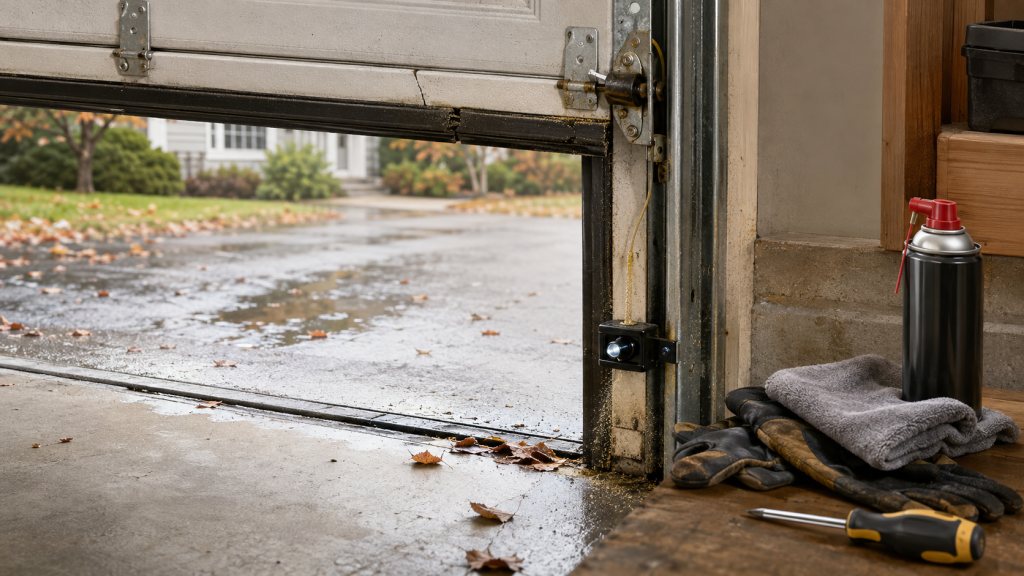
Northern Virginia’s spring pollen, humid summers, rain, falling leaves, and winter temperature changes can leave debris and moisture around sensors, seals, tracks, and exposed hardware.
During seasonal checks, pay close attention to dirty sensor lenses, cracked weather seals, corrosion on exposed metal, and changes in how smoothly the door moves. For example, pollen or leaves around a sensor may cause problems that are easy to miss until the door begins reversing.
The important question is whether weather, moisture, or debris has changed how the system operates or how well the garage stays sealed.
When Does a Garage Door Need Professional Attention?
A garage door should be professionally inspected if it becomes crooked, unusually heavy, difficult to move, much louder than normal, or starts moving differently than it usually does. A broken spring, frayed cable, bent track, repeated reversing, or a major change in movement also points to a repair issue rather than routine maintenance.
If the door is still operating normally but is due for a professional inspection, Door Doctor’s garage door maintenance and tune-ups provide a more complete system check than homeowners should perform on their own.
Frequently Asked Questions About Garage Door Maintenance
Ready to Schedule Garage Door Maintenance?
If your garage door is due for an inspection or has started sounding or moving differently, schedule garage door maintenance and tune-ups with Door Doctor.
Call 703-709-7933 to schedule service in Northern Virginia.