
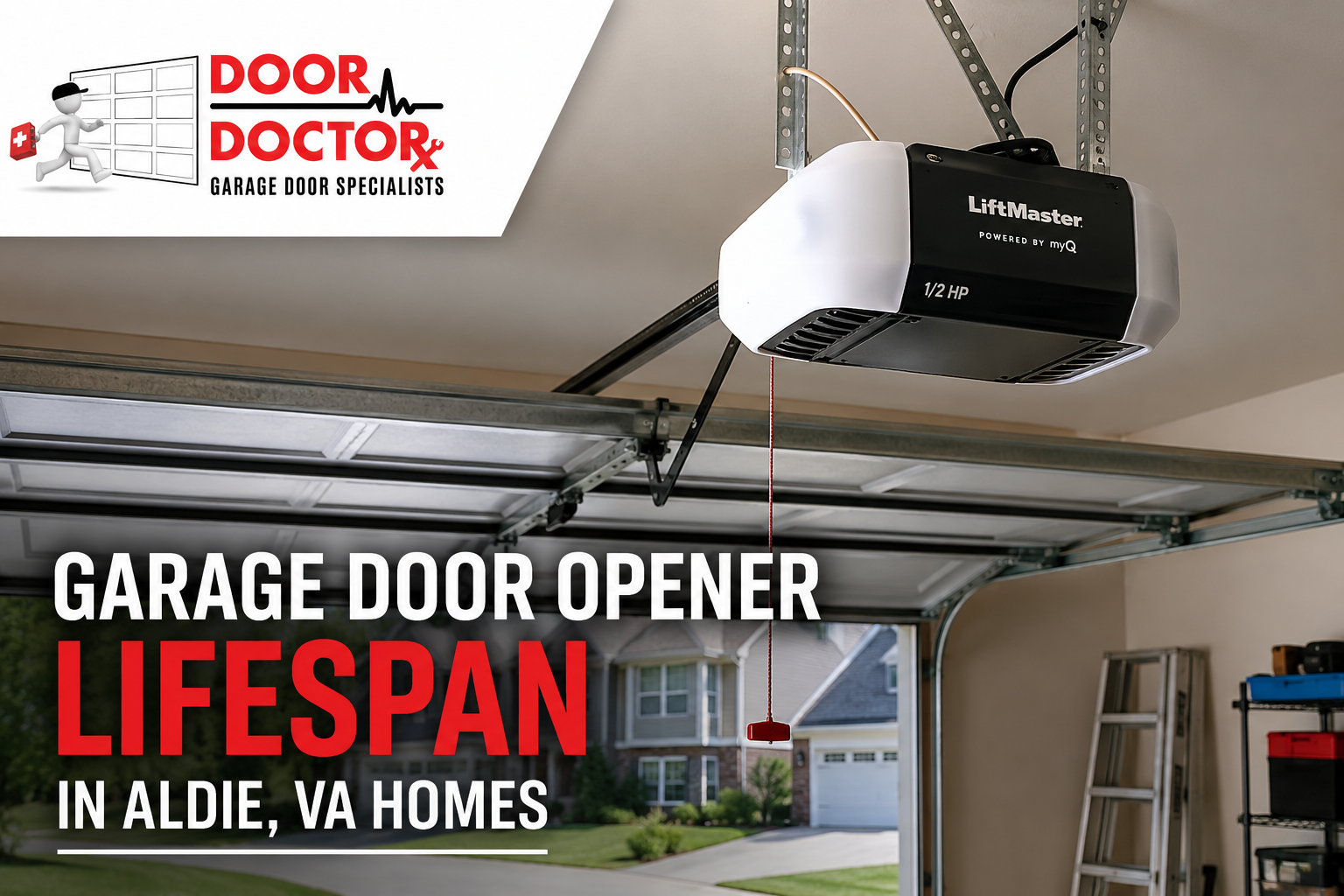
How Long Do Garage Door Openers Last in Aldie, VA?
Quick Answer: Many garage door openers last about 10 to 15 years, but actual lifespan depends on daily use, door balance, maintenance, opener quality, and electrical problems. Aldie’s humidity, seasonal temperature changes, and thunderstorms can add stress to the surrounding garage door system, especially when parts are already worn.
What Is the Average Garage Door Opener Lifespan?
Many residential garage door openers remain in service for about 10 to 15 years. A lightly used opener connected to a balanced and well-maintained door may last longer, while one operating a heavy, damaged, or frequently used door may wear out sooner.
Age is not the only factor. The opener depends on the springs, rollers, hinges, cables, tracks, and other parts of the garage door system. When the door becomes difficult to move, the opener must work harder during every opening and closing cycle.
Why Daily Use Matters
One cycle includes one complete opening and closing of the garage door. A household that uses the garage as its main entrance may operate the door several times each morning and evening, adding much more wear than a garage used mainly for occasional vehicle storage.
This is why two openers installed in the same year can age differently. Frequent operation adds wear to the motor, internal gears, rail, belt, chain, and other moving components.
Homeowners should consider both age and performance. An older opener that works smoothly may still have useful life remaining, while a newer unit that strains or repeatedly fails may need attention.
How Aldie’s Climate Can Affect the System
Aldie’s weather usually affects the garage door and its hardware more than the opener motor itself. Humidity, rain, cold mornings, summer heat, and changing temperatures can increase friction or reveal existing problems in the surrounding system.
Moisture may contribute to corrosion on exposed hardware or electrical connections. Cold weather may make aging seals and some lubricants less flexible, while heat can place additional stress on electrical and plastic components over time.
These conditions do not automatically cause an opener to fail. However, weather-related strain combined with worn rollers, weak springs, damaged tracks, or poor balance can make the opener work harder and shorten its service life.
Can Thunderstorms or Power Problems Damage an Opener?
Modern garage door openers contain electronic components such as circuit boards, receivers, wall controls, and safety-sensor circuits. Lightning-related surges, outages, and sudden electrical changes may cause the opener to lose settings, stop responding, or behave unpredictably.
If the problem begins after a storm, first check the outlet, breaker, remote batteries, and wall control. Repeated flashing, lost remote communication, or complete failure may indicate an electrical or circuit-board problem.
Surge protection and battery backup serve different purposes. A compatible surge protector may help reduce electrical risk, while battery backup allows certain openers to operate during an outage. Neither option prevents every possible failure.
What Shortens a Garage Door Opener’s Life?
| Factor | Effect on the Opener | What You May Notice |
| Frequent use | Adds more cycles to the motor and drive system | Increasing noise or slower movement |
| Poor door balance | Forces the opener to handle more weight | Straining, jerking, or stopping |
| Worn springs | Reduces support for the door | Heavy movement or failure to stay open |
| Damaged rollers or hinges | Creates friction | Squeaking, grinding, or shaking |
| Bent or obstructed tracks | Interferes with smooth travel | Scraping or uneven movement |
| Moisture or corrosion | Affects hardware and connections | Noise or intermittent operation |
| Power surges | May damage electronic controls | No response, flashing, or lost settings |
| Deferred maintenance | Allows minor problems to worsen | Repeated noise and breakdowns |
A garage door opener is designed to control the door’s movement. It should not be expected to overcome broken springs, severe friction, damaged tracks, or a poorly balanced door.
Signs an Opener May Be Wearing Out
An aging opener may continue working for some time, but changes in performance can indicate wear. Common warning signs include:
- Grinding, buzzing, or rattling
- Slower opening or closing
- Frequent stops or reversals
- Intermittent operation
- Unreliable remotes or keypads
- A motor that runs without moving the door
- Repeated problems after power interruptions
- Different components needing frequent repairs
One isolated issue may have a simple cause, such as a weak remote battery or blocked safety sensor. Several recurring symptoms may point to broader wear in the opener or garage door system.
Why Door Balance Is Important
The springs support most of the garage door’s weight. The opener mainly guides and controls the door’s movement.
When the door is poorly balanced, the opener may carry more load than it was designed to handle. This can wear down the motor, gears, belt, chain, or rail more quickly.
The door should be evaluated before an opener is replaced. Installing a new motor without correcting a balance or hardware problem may allow the same strain to continue.
Garage door springs and cables are under significant tension. Homeowners should not attempt to adjust or replace them without proper training and equipment.
Does Drive Type Affect Lifespan?
Chain-, belt-, and screw-drive openers have different noise levels, maintenance needs, and operating characteristics. However, drive type alone does not determine how long an opener will last.
Chain-drive openers are durable but may become louder as parts wear. Belt-drive openers usually operate more quietly and may be useful in attached garages. Screw-drive systems have different lubrication and maintenance requirements.
Correct installation, door balance, daily use, maintenance, and overall build quality usually matter more than drive type alone.
Can Maintenance Extend Opener Life?
Regular maintenance may reduce avoidable strain and help identify problems before they worsen.
Homeowners can safely keep the photo eyes clean, check remote and keypad operation, listen for new sounds, inspect visible hardware, and keep the tracks free of debris. Lubrication should follow the door and opener manufacturers’ instructions because not every part should be treated in the same way.
A professional inspection may include checking door balance, springs, cables, roller condition, track alignment, opener tension, safety reversal, and internal opener components.
Do not continue operating a door that is frozen, off track, unusually heavy, or clearly struggling. Repeatedly forcing it can damage the opener and worsen the original problem.
Should You Repair or Replace the Opener?
The right choice depends on the opener’s age, condition, repair history, safety operation, and the cost of the needed work.
| Repair May Make Sense | Replacement May Make Sense |
| The opener is newer and has been reliable | The opener is older and repeatedly unreliable |
| One affordable part has failed | Several major parts are worn or failing |
| The door system is balanced and in good condition | The opener has been strained by ongoing door problems |
| Sensors, remotes, wiring, or settings need correction | The motor, circuit board, gears, or drive system has major wear |
| Replacement parts remain available | Parts are unavailable or repair costs approach replacement |
| Safety operation remains dependable | Safety features or reversal operation are unreliable |
Age alone does not determine the answer. A dependable older opener may continue working, while a newer unit with extensive damage may not be economical to repair.
Which Replacement Features Are Worth Considering?
When replacement is the better option, focus first on choosing an opener that matches the garage door’s weight, size, condition, and daily use.
Useful features may include quieter belt-drive operation, battery backup, smartphone controls, improved lighting, rolling-code security, and updated safety sensors. A quieter opener may be especially helpful when a bedroom, office, or living area is beside or above the garage.
Not every household needs every feature. The best opener should fit the door, garage layout, noise needs, budget, and preferred level of connectivity.
Frequently Asked Questions
Need Garage Door Opener Help in Aldie, VA?
If your garage door opener has become loud, slow, unreliable, or difficult to operate, Door Doctor can inspect the opener and the surrounding garage door system. An evaluation can help identify whether the problem involves the motor, door balance, springs, rollers, safety sensors, remote controls, electrical components, or another part of the system.
Call Door Doctor at (703) 912-0719 to request garage door opener repair or replacement service in Aldie, Virginia.