
Garage Door Reverses Near the Floor? | Door Doctor
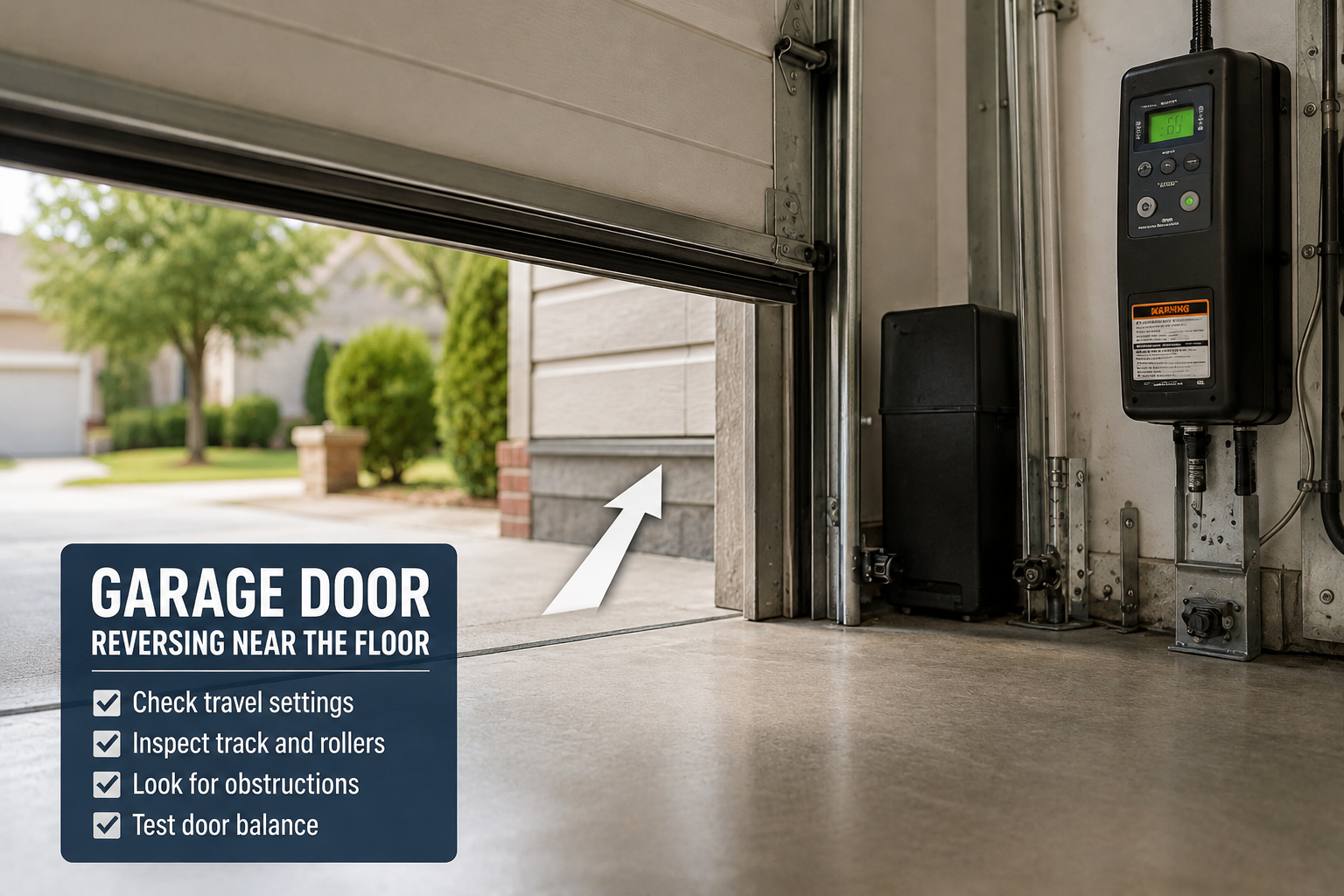
If your garage door closes most of the way and then reverses near the floor, the opener’s travel setting or resistance near the bottom of the door’s path may be involved. Watch whether the door touches the floor before reversing, stops slightly above it, or begins scraping or slowing near the bottom. Safety sensors can still cause closing problems, but a door that travels smoothly almost all the way down deserves a closer look at travel settings and mechanical resistance.
What Causes a Garage Door to Reverse Near the Floor?
A garage door opener is designed to stop or reverse when it detects resistance or another problem while closing. If the door gets close to the floor and then goes back up, the cause may be something simple or a mechanical issue that needs inspection.
| Possible Cause | What You May Notice | What It May Mean |
|---|---|---|
| Object or debris | Door reverses at the same point | Something may be blocking normal travel |
| Weather seal resistance | Door reaches the floor, then reverses | Seal may be folded, damaged, or creating resistance |
| Track or roller problem | Jerky, uneven, or crooked movement | Door may not be moving freely |
| Safety sensor issue | Door reverses or will not stay closed | Sensors may be blocked, dirty, or malfunctioning |
| Travel setting issue | Door touches the floor and immediately reverses | Opener may be trying to move the door too far |
| Force-related issue | Door reverses without a clear obstruction | Resistance or another mechanical problem may need diagnosis |
The timing of the reversal matters. A door that reverses only when it reaches the floor may have a different problem from one that reverses halfway down.
Could Something Be Blocking the Garage Door?
Yes. Start with the simplest possibility.
Look along the floor and around the bottom of the door for leaves, stones, toys, tools, or other debris. Even a small object can interfere with normal closing.
Watch one closing cycle from a safe distance. If the door reaches the same point each time before reversing, note where it happens.
Can the Weather Seal Make a Garage Door Reverse?
A damaged or folded bottom weather seal can create extra resistance when the door reaches the floor.
Check the seal without reaching underneath a moving door. If it is torn, folded, stiff, or no longer sitting evenly, it may need attention.
Door Doctor’s garage door weather stripping information explains when damaged sealing may need replacement.
Could the Tracks or Rollers Be Causing Resistance?
Yes. A garage door should move smoothly and remain reasonably level as it opens and closes.
If the door shakes, binds, tilts, or becomes noticeably uneven near the bottom, the rollers or tracks may not be allowing normal movement. A visibly bent track or damaged roller is a repair issue rather than routine homeowner maintenance.
Do not try to straighten tracks or reposition rollers yourself.
Can Safety Sensors Cause a Door to Reverse Near the Floor?
Safety sensors can cause closing problems if their path is blocked, the lenses are dirty, or the system is not working correctly.
Homeowners can safely check for objects around the sensors and gently clean visible dirt from the lenses. If the area is clear but the door continues reversing or the sensor lights still show a problem, garage door safety sensor repair may be needed.
Can Opener Travel or Force Settings Cause Reversing?
Yes. Travel settings control how far the door moves, while force settings affect how the opener responds to resistance.
If the door reaches the floor and immediately reverses, incorrect travel settings or unexpected resistance may be involved. Increasing opener force is not a safe shortcut because it can hide the actual cause of the problem.
Travel or force issues should be diagnosed rather than adjusted blindly.
What Can You Safely Check Yourself?
Homeowners can safely check for visible obstructions, debris near the floor, dirty sensor lenses, a folded weather seal, and obvious changes in how the door moves.
Watch the door from a safe distance during one closing cycle. If it becomes crooked, jerky, unusually loud, or continues reversing after visible obstructions are cleared, stop troubleshooting.
Do not adjust springs, cables, bottom brackets, door balance, tracks, or opener force settings yourself.
When Should a Garage Door Technician Inspect the Problem?
Professional inspection is appropriate when the door keeps reversing after simple checks or when it moves unevenly, binds, becomes crooked, or shows visible damage.
If the cause is not obvious, garage door repair can help identify whether the issue is related to the opener, sensors, tracks, rollers, weather seal, or another component.
Frequently Asked Questions About Garage Doors Reversing Near the Floor
Need Help With a Garage Door That Keeps Reversing?
If your garage door continues reversing near the floor after simple checks, the problem may need a closer inspection.
Call 703-709-7933 for garage door service in Northern Virginia.