
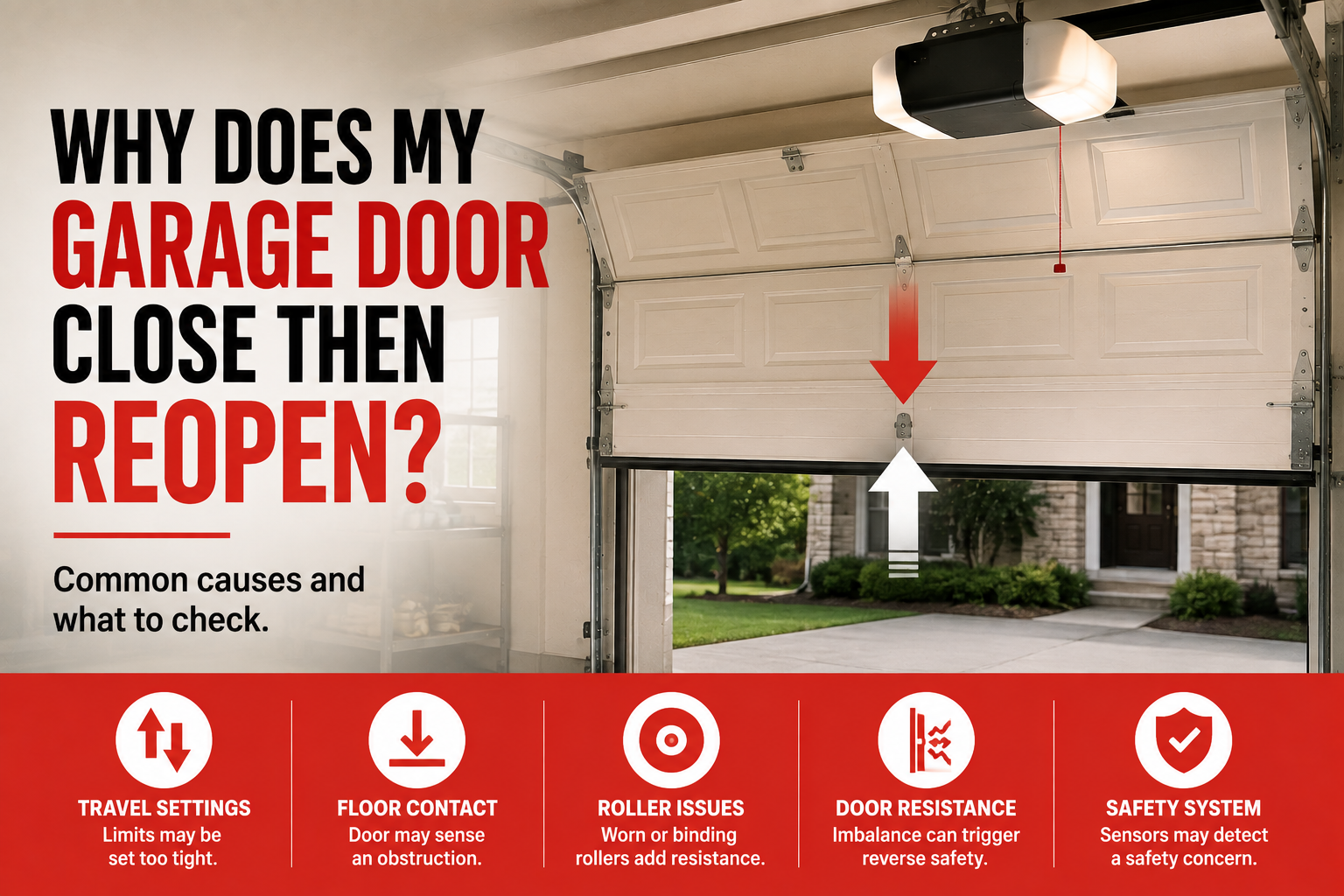
Why Does My Garage Door Close All the Way and Then Reopen?
If your garage door reaches the floor and then immediately opens again, the opener’s closing travel setting may be telling the door to move farther than its correct closed position. Resistance near the bottom of the door’s path can sometimes cause similar behavior. McLean homeowners should pay attention to whether the door clearly touches the floor before reversing, because that detail can help separate this problem from a safety sensor issue.
Why Does the Door Reopen After Touching the Floor?
A garage door opener needs to know where the fully closed position is. If that position is not set correctly, the opener may continue pushing after the door has already reached the floor.
The opener can then react to the added resistance by reversing the door. This often looks different from a sensor problem because the door completes nearly the entire closing cycle before going back up.
Watch the door from a safe distance. If it moves smoothly, reaches the floor, pauses, and then reverses, the closing travel setting is one area worth checking.
What Does the Closing Travel Setting Control?
The travel setting controls how far the opener moves the garage door during its opening and closing cycles.
If the closing travel is too short, the door may stop above the floor. If it is set too far, the door may press against the floor before reversing.
Adjustment methods vary by opener brand and model. Use the instructions for your specific opener rather than guessing at the correct setting.
Homeowners dealing with repeated opener problems can learn more about garage door opener repair.
How Is This Different From a Safety Sensor Problem?
The timing of the reversal can provide a useful clue.
| What the Door Does | What May Need Attention |
| Reverses soon after closing begins | Safety sensor or obstruction |
| Stops before reaching the floor | Travel setting or resistance |
| Touches the floor and reopens | Closing travel setting |
| Slows or scrapes near the bottom | Roller, track, or door resistance |
| Moves crooked while closing | Cable, spring, track, or balance issue |
Safety sensor problems often interrupt the closing cycle before the door reaches the floor. A door that consistently travels all the way down first points toward a different set of checks.
These behaviors are clues rather than a complete diagnosis because opener models and garage door systems can respond differently.
Can the Floor or Bottom Seal Affect How the Door Closes?
Yes. The garage floor and bottom weather seal are part of the door’s final closing position.
A damaged, folded, or unusually thick seal may change how the door contacts the floor. Debris near the threshold can also prevent the door from reaching its normal resting position smoothly.
Look along the bottom of the door and the floor where it closes. Remove leaves, small objects, or other loose debris, but do not force the door downward if it continues reversing.
Can Rollers or Tracks Cause the Door to Reopen?
Resistance near the bottom of the door’s travel can sometimes cause the opener to reverse.
A worn roller, damaged section of track, or another moving component may create extra resistance as the door approaches the floor. The door may slow, scrape, shake, or make a new noise before changing direction.
If the reversal happens at the same height each time, watch that section of the tracks and rollers from a safe distance. Do not straighten tracks or force rollers into position while the door is operating.
Why Should You Avoid Increasing the Opener Force?
Increasing force can hide the symptom without correcting the cause.
If the door is pressing too far into the floor or encountering mechanical resistance, making the opener push harder does not fix the travel setting, roller, track, or balance problem.
Start by identifying why the door is reversing. If the door becomes crooked, unusually heavy, or difficult to move, stop troubleshooting the opener and have the mechanical system checked instead.
When Should You Stop Adjusting the Opener?
Stop making adjustments if the garage door is shaking, scraping, moving unevenly, or becoming difficult to control.
A loose cable, damaged spring, bent track, or other mechanical problem cannot be corrected through opener settings. Continuing to operate the door may place additional strain on the opener and moving parts.
If the door otherwise moves smoothly but repeatedly touches the floor and reopens, use the manufacturer’s instructions to check the closing travel setting before changing anything else.
Frequently Asked Questions About Garage Doors That Reopen
What Should You Do if the Door Keeps Reopening?
If the garage door continues touching the floor and reopening after the closing area and manufacturer-recommended travel settings have been checked, the opener or another moving component may need closer inspection.
Door Doctor serves McLean and surrounding Northern Virginia communities. Learn more about garage door service in McLean or contact Door Doctor at 703-709-7933 if the door continues reopening.