
How to Lubricate Garage Door Rollers in Sterling, VA
Quick Answer:
Use a silicone-based garage door lubricant on the roller stems, hinge pivot points, springs, bearing plates, and other moving metal parts, but do not spray lubricant inside the tracks. Keep the tracks clean and dry, because greasy tracks can collect dirt, create buildup, and make the door move worse over time.
Where Should You Lubricate Garage Door Rollers?
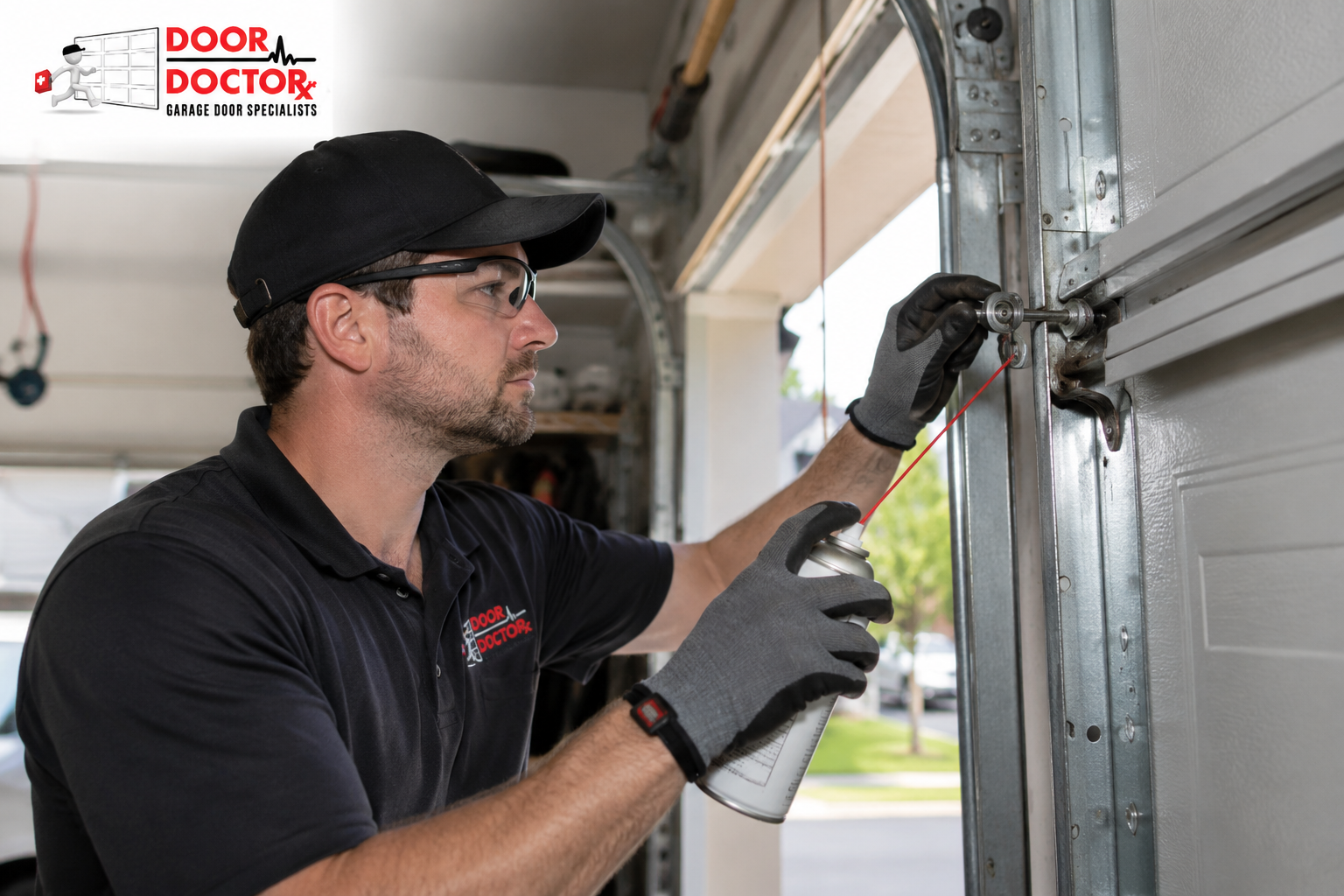
Lubricate the roller stems where the rollers connect to the hinges. This is the metal part that moves as the door opens and closes. You can also apply a light amount of lubricant to the hinge pivot points, springs, bearing plates, and other moving metal areas.
Do not soak the roller wheels. Do not spray lubricant into the tracks. Do not spray the opener motor, wall controls, safety sensors, belt drive, or electrical parts.
For nylon rollers, focus on the metal stem and hinge area. Some nylon rollers have sealed bearings that do not need direct lubrication.
Garage Door Lubrication Dos and Don’ts
- Do apply a light amount of garage door lubricant to roller stems, hinge pivot points, springs, bearing plates, and moving metal contact points.
- Do keep the tracks clean and dry. The rollers should move through clean tracks, not greasy ones.
- Do use a silicone-based garage door lubricant, white lithium garage door lubricant, or a product labeled for garage door hardware.
- Do not spray lubricant into the tracks, opener motor, wall controls, safety sensors, belt drive, or electrical parts.
- Do not use heavy grease, engine oil, or too much product. These can attract dirt, drip, or make the door move worse.
- Do not try to fix a stuck, crooked, heavy, or shaking garage door with lubricant. If the door is not moving normally, call a garage door technician.
Why Garage Door Lubrication Matters in Sterling, VA
Sterling’s humid weather can be hard on garage door hardware. Moisture in the air can add to rust, buildup, and friction on rollers, hinges, springs, tracks, and other metal parts.
When these parts dry out or collect grime, the door may squeak, rattle, shake, pop, or drag. Lubrication helps reduce friction and can make the garage door move more smoothly when the system is otherwise in good condition.
Lubrication is basic maintenance, not a repair for broken parts. If the door is uneven, jammed, heavy, or struggling to move, a technician should inspect it before more damage occurs.
The Best Lubricant for Garage Door Rollers
Use a lubricant made for garage doors or moving metal hardware. A silicone-based garage door spray is a good choice for many homeowners. White lithium garage door lubricant can also work well on metal moving parts.
Avoid using heavy grease. It can attract dust, dirt, and debris.
Avoid using engine oil. It can drip, stain, and create a mess.
Avoid spraying too much product into the tracks. The rollers need clean tracks, not greasy ones.
Standard WD-40 can help loosen or clean some parts, but it is not the best long-term garage door lubricant. When possible, choose a product labeled for garage doors or follow the recommendation from your garage door manufacturer.
Metal Rollers vs. Nylon Rollers
Metal garage door rollers may need light lubrication on the moving metal areas. Apply lubricant to the stem, hinge connection, and any exposed metal contact points that move as the door operates.
Nylon rollers are different. The nylon wheel itself usually does not need to be soaked. Focus on the metal stem where the roller connects to the hinge. If the roller has sealed bearings, direct lubrication may not be needed.
If a roller is cracked, chipped, rusty, loose, or wobbling in the track, lubricant will not fix it. The roller may need to be replaced.
What You Need Before You Start
Most homeowners only need a few basic items to lubricate garage door rollers.
- Garage door lubricant
- Clean rag or paper towels
- Work gloves
- Safety glasses
- Step ladder
Before you begin, look at the door while it is closed. If the door is crooked, stuck, hanging unevenly, or has loose cables, do not try to fix it with lubricant.
Do not remove hinges, loosen cables, adjust springs, or take the garage door apart. These parts can be dangerous when handled without the right tools and training.
Step 1: Close the Garage Door and Clear the Area
Start with the garage door fully closed. This gives you safer access to the rollers, hinges, and lower moving parts.
Move cars, tools, bikes, storage bins, and other items away from the door area. Keep children and pets away while you work.
If the door will not close safely, stop there. A stuck, crooked, or jammed garage door should be inspected by a technician.
Step 2: Clean the Tracks and Roller Area
Use a clean rag to wipe dirt, dust, and buildup from the tracks and around the roller area. The goal is to remove grime before adding lubricant.
Do not coat the tracks with oil or grease. The rollers should move through clean tracks. Greasy tracks can attract debris and cause rough movement.
If the tracks are bent, heavily rusted, loose, or pulling away from the wall, lubrication will not solve the problem. The tracks may need professional adjustment or repair.
Step 3: Lubricate the Roller Stems
The roller stem is the metal part that connects the roller to the hinge. This is one of the most important places to apply lubricant.
Spray a small amount where the stem moves through the hinge. Wipe away extra lubricant so it does not drip or collect dirt.
For metal rollers, you can lightly lubricate the moving metal areas. For nylon rollers, focus on the metal stem and hinge area. Do not soak the nylon wheel.
Step 4: Lubricate the Hinges
Garage door hinges bend and move as the door travels through the tracks. When hinges get dry, rusty, or stiff, the door may squeak, pop, or move roughly.
Apply a light amount of lubricant to each hinge pivot point. Use only enough to help the hinge move smoothly.
If a hinge is cracked, badly rusted, loose, or pulling away from the door, it should be inspected by a professional. A damaged hinge can affect how the door moves and may put extra strain on the opener.
Step 5: Apply a Light Coat to the Springs
Garage door springs can benefit from light lubrication. A small amount of lubricant may help reduce friction and noise as the spring coils move.
Spray a light coat across the spring. Do not touch, loosen, tighten, or adjust it.
Garage door springs are under high tension and can cause serious injury. If you see a gap in the spring, hear a loud bang, or notice that the door suddenly feels heavy, stop using the door and call a garage door technician.
Step 6: Lubricate Bearing Plates and Other Moving Metal Points
Bearing plates are usually near the torsion spring system above the garage door. These parts help the torsion shaft turn as the door opens and closes.
A light spray on moving metal contact points can help reduce squeaking. You may also lubricate metal lock hardware if your door has it.
Do not spray the opener motor, wall controls, safety sensors, belt drive, or electrical parts. These areas should stay dry and clean.
Step 7: Test the Garage Door
After lubricating the moving parts, open and close the garage door a few times. Listen to the sound and watch how the door moves.
A smoother, quieter door is a good sign. The door should move evenly without shaking, dragging, popping, or grinding.
If the door still sounds rough, feels heavy, gets stuck, or shakes badly, schedule a garage door tune up. A technician can check the rollers, hinges, springs, cables, tracks, opener, and door balance.
How Often Should You Lubricate Your Garage Door in Sterling?
Many homeowners should lubricate their garage door about every six months. In Sterling’s humid climate, some doors may need attention more often.
You may need lubrication sooner if the door gets louder, the rollers squeak, the hinges look dry, the garage feels damp, or the door is used many times each day.
Regular lubrication can help reduce wear, but it does not replace professional repair. If the door has damaged parts or balance problems, those issues need to be fixed.
Common Garage Door Lubrication Mistakes
One of the most common mistakes is spraying lubricant into the tracks. The tracks should be clean, not greasy. Too much lubricant can collect dust, dirt, and debris.
Another mistake is using the wrong product. Heavy grease, engine oil, and general household oils can create buildup or drip onto the garage floor.
Homeowners should also avoid assuming every noisy garage door only needs lubricant. Noise can come from worn rollers, loose hinges, damaged tracks, weak springs, cable issues, opener strain, or poor door balance.
Never loosen cables, remove hinges, or adjust springs while trying to lubricate the door. These parts can be dangerous without the right tools and training.
Signs Lubrication Is Not Enough
Lubrication can quiet dry hardware, but it cannot repair broken or worn parts. If your garage door still sounds rough after lubrication, something else may be wrong.
You may need professional service if the rollers are cracked, chipped, rusty, or wobbling in the track. You should also call a technician if the tracks are bent, the hinges are loose, the cables look frayed, or the opener struggles to lift the door.
A garage door that gets stuck halfway, shakes badly, feels heavy, or hangs unevenly should not be ignored. These symptoms can point to roller problems, spring issues, track damage, opener strain, or a door balance problem.
If your garage door still shakes, grinds, or feels heavy after lubrication, Door Doctor VA can inspect the system and explain what is causing the problem. Call (703) 454-5765 to schedule garage door service in Sterling or elsewhere in Northern Virginia.
Garage Door Maintenance From Door Doctor VA
Door Doctor VA provides garage door maintenance, tune ups, roller replacement, and repair for homeowners in Sterling and throughout Northern Virginia.
Our experienced, certified technicians work on all makes and models. We inspect the door, explain what we find, and recommend the right solution based on the condition of your system.
During a garage door tune up, our technicians can check roller wear, hinge condition, spring condition, cable placement, track alignment, opener strain, and door balance. If lubrication is enough, we will tell you. If worn rollers, loose hardware, damaged tracks, spring issues, cable problems, or opener strain are causing the noise, we will explain your repair options clearly.