
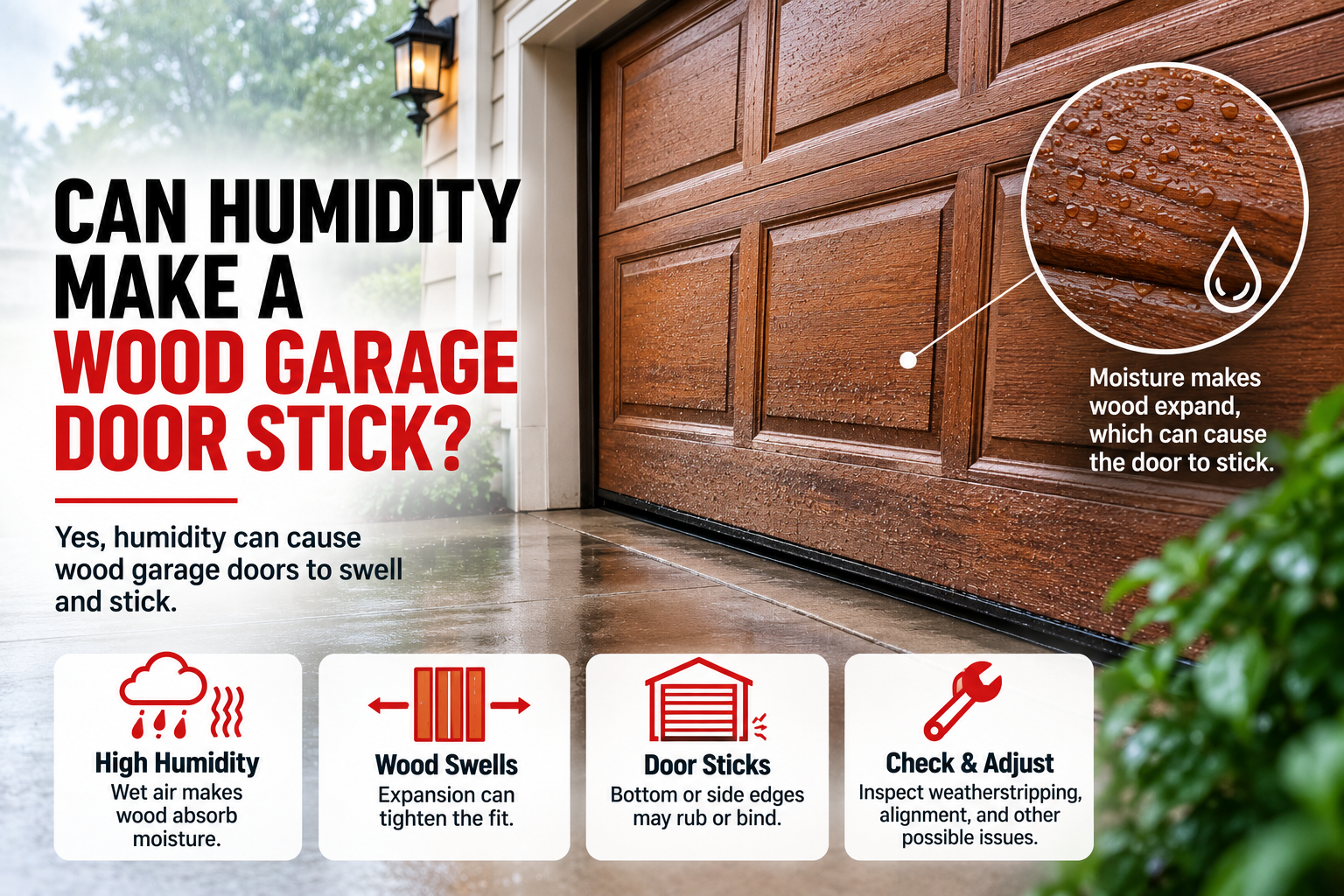
Can Humidity Make a Wood Garage Door Stick?
Yes. High humidity can cause a wood garage door to absorb moisture and expand, which may make it rub against the frame, drag near the bottom, or become harder to move. If the sticking gets worse during humid or rainy weather and improves after several dry days, moisture may be involved. If the door stays crooked, heavy, noisy, or difficult to move regardless of the weather, another garage door problem may be causing the resistance.
Why Does Humidity Make a Wood Garage Door Stick?
Wood naturally absorbs and releases moisture as surrounding conditions change. During periods of high humidity, the material can expand enough to create a tighter fit around the garage door opening.
Paint, stain, and other protective finishes help limit moisture exposure. When that finish starts peeling, cracking, or wearing away, exposed areas can absorb moisture more easily.
A wood garage door that moves normally during dry conditions but begins rubbing along an edge during a humid McLean summer may be reacting to moisture rather than a mechanical failure.
How Can You Tell if Moisture Is Causing the Sticking?
The timing of the problem is one of the most useful clues.
| What You Notice | What May Be Involved |
| Door sticks mainly during humid or rainy weather | Moisture related swelling |
| Sticking improves after several dry days | Wood expansion and contraction |
| Bottom edge or corner looks swollen | Moisture exposure |
| Paint or stain is peeling | Exposed wood may be absorbing moisture |
| Same area rubs throughout the year | Track, alignment, or door fit problem |
| Door moves crooked or unevenly | Cable, spring, track, or balance issue |
More than one problem can exist at the same time. Minor wood expansion may become much more noticeable if the door already has a worn roller, alignment issue, or other source of resistance.
Which Parts of a Wood Garage Door Are Most Affected by Moisture?
Pay close attention to the bottom edge, sides, and corners of the door.
The lower part of a garage door is closer to wet pavement, runoff, and moisture around the opening. Corners and side edges can also become vulnerable when their protective finish has worn away.
Look for peeling paint, fading stain, rough wood, dark moisture marks, raised areas, or places where the door has started rubbing against the frame.
If one lower corner becomes tight only during humid weather and the finish in that area is damaged, moisture absorption may be contributing to the problem.
Should You Sand a Wood Garage Door That Is Sticking?
Not as the first step.
Wood that has temporarily expanded because of humidity may contract again as conditions become drier. Sanding an edge while the wood is swollen can leave an unnecessary gap once the moisture level drops.
First determine whether the wood itself is causing the sticking. A bent track, worn roller, alignment problem, or loose component will not be corrected by removing material from the door.
If the same area continues rubbing during both humid and dry conditions, the cause deserves a closer inspection before the door is altered.
Can a Swollen Door Make the Garage Door Opener Work Harder?
Yes. Humidity affects the wood rather than the opener directly, but a swollen door can create more resistance as it moves.
If the door rubs against the frame, threshold, or another surface, the opener may slow, strain, stop, or reverse while trying to move it.
Do not increase the opener force simply to push the door through a tight area. Extra force does not correct swelling, track resistance, or another mechanical problem.
When Is Sticking Probably Not Caused by Humidity?
Weather patterns can help separate moisture related swelling from another garage door problem.
If the door continues sticking after several dry days, repeatedly catches at exactly the same point, or moves unevenly throughout the year, another component may be involved.
A door that becomes crooked or unusually heavy deserves particular attention. Crooked movement may involve a cable, spring, track, or balance problem. Grinding, jerking, or shaking can point toward rollers, tracks, or other moving components.
If the door is difficult to control or no longer moves evenly, stop forcing it open or closed.
How Can You Limit Moisture Related Swelling?
Keeping the wood properly protected can reduce how much moisture it absorbs.
Inspect the paint, stain, or exterior finish for peeling, cracks, and bare areas. The bottom edge and corners are easy to overlook, so include them when checking the condition of the door.
Also inspect the bottom seal and weatherstripping. Damaged seals can allow water and outdoor debris to remain around vulnerable areas of the garage opening.
Routine garage door maintenance can also help identify weather seal, movement, and hardware issues that may make a sticking problem worse.
If the wood is already badly warped or permanently distorted, applying another coat of finish will not necessarily restore the shape of the door.
Frequently Asked Questions About Wood Garage Doors and Humidity
What Should You Do if the Wood Door Keeps Sticking?
If your wood garage door continues binding after the weather becomes drier, or if it starts shaking, scraping, moving unevenly, or putting noticeable strain on the opener, the problem may involve more than humidity.
Door Doctor serves McLean and surrounding Northern Virginia communities. Learn more about garage door service in McLean or contact Door Doctor at 703-709-7933 if the door continues sticking or no longer moves normally.