
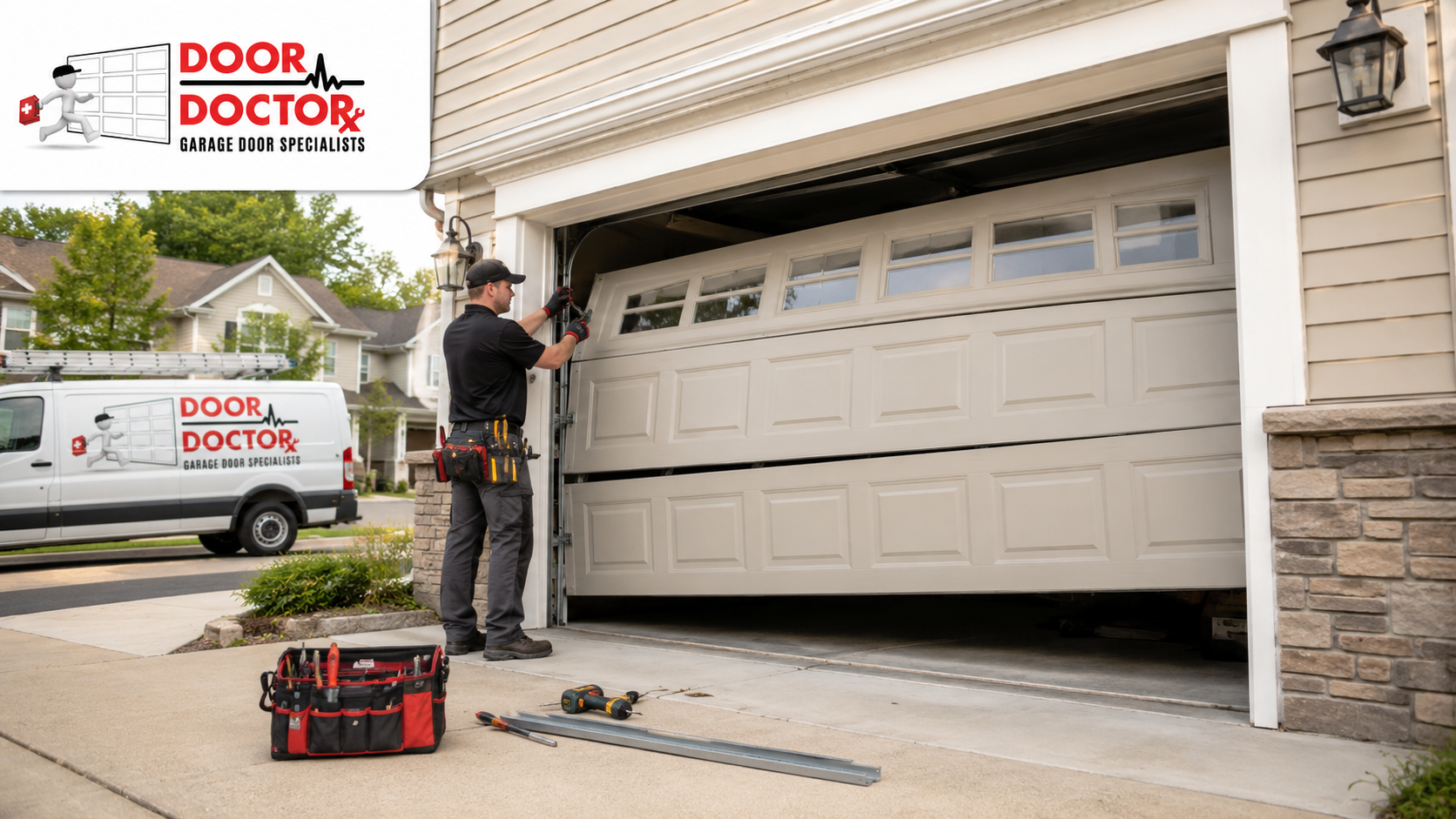
How to Fix a Noisy, Stuck, or Uneven Garage Door in Northern Virginia
Quick Answer: If your garage door is noisy, stuck, uneven, slow, or refusing to close, start with a few simple checks. Replace the remote batteries, make sure the opener has power, clean the safety sensors, and look for visible debris in the tracks. Leave springs, cables, tracks, and door-balance adjustments to a trained technician.
Common Garage Door Problems at a Glance
| Symptom | Possible Cause | Safe First Step |
|---|---|---|
| Door will not close | Dirty, blocked, or misaligned safety sensors | Clean the lenses and check the indicator lights |
| Door will not open | Power issue, opener problem, door lock, or broken spring | Check the opener power and avoid repeated testing if it will not move normally |
| Door is noisy | Dry hardware, worn rollers, loose parts, or opener wear | Listen for when and where the sound occurs |
| Door moves unevenly | Cable, spring, roller, or track problem | Avoid operating it and schedule an inspection |
| Door reverses while closing | Sensor issue, obstruction, or travel-setting problem | Clear the opening and inspect the sensors |
| Opener works inconsistently | Remote, keypad, wiring, sensor, or opener issue | Test the wall control and replace the remote battery |
One symptom can have several causes. The table can help you identify a safe first step, but it cannot confirm which component has failed.
Why Small Problems Can Get Worse Over Time
A garage door relies on several parts working together. The springs support much of the weight, the opener controls movement, and the rollers guide the door through the tracks. Cables, hinges, brackets, and safety sensors also play an important role.
When one part starts to wear out, it can place extra pressure on nearby components. A worn roller may create drag, while a weak spring can make the opener work harder. A sensor problem may keep the door from closing even when the motor still runs.
Jerking, dragging, banging, reversing, or increasing noise usually means something has changed. Addressing the cause early can help prevent a smaller issue from spreading through the system.
What You Can Safely Check First
There are a few things homeowners can check before calling for service. The goal is to rule out simple problems without adjusting high-tension parts.
Check the Remote, Keypad, and Wall Control
If the door does not respond, replace the remote battery and test the wall button inside the garage.
If the wall control works but the remote does not, the issue may involve the remote, keypad, signal, or programming.
If neither control works, make sure the garage door opener is plugged in and receiving power. A tripped breaker, loose plug, or faulty outlet can sometimes look like a larger mechanical problem.
Clean and Inspect the Safety Sensors
If the door starts closing and then reverses, or refuses to close at all, check the safety sensors near the bottom of the tracks.
Dust, spider webs, moisture, direct sunlight, or a small bump can interrupt the beam. Gently wipe the lenses and make sure the sensors appear to face each other.
Blinking or unlit indicator lights may point to misalignment, an obstruction, damaged wiring, or loss of power.
Look for Visible Track or Roller Trouble
With the door fully closed and stable, step back and look at the system. Check whether the bottom edge sits evenly along the floor and whether the tracks appear bent or damaged.
You may also notice cracked rollers, loose hinges, displaced brackets, or a cable that appears slack or out of position. A visual check is mainly useful for describing the issue when you request service.
Listen to the Way It Sounds
Garage doors often make unusual sounds before a part fails completely. Grinding, squealing, rattling, popping, scraping, or banging can help narrow down where the issue may be.
Notice whether the sound happens when the door first starts moving, at one point in the track, or when it changes direction. Noise paired with shaking, hesitation, or slow travel usually deserves closer attention.
What Common Symptoms May Mean
The table gives a quick overview. The sections below explain what each symptom can tell you and what details may help identify the cause.
The Door Will Not Open
If the opener hums but the door does not move, the cause may involve a broken spring, engaged lock, worn opener part, or a disconnect between the opener and the door.
If nothing happens at all, the issue may be electrical, mechanical, or related to the controls.
Notice whether the motor runs, whether the opener light comes on, and whether the problem started suddenly or gradually. Those details can help narrow down the source.
The Door Will Not Close
A door that will not close may have blocked sensors, an obstruction, damaged wiring, or an incorrect travel setting.
Sometimes it starts closing and immediately reverses. In other cases, it stops before reaching the floor.
Clear the opening, clean the sensor lenses, and check the indicator lights. Also note whether both sensor lights remain steady or blink when the door tries to close.
Why Is the Door Making So Much Noise?
Worn rollers, dry hinges, loose hardware, spring wear, track damage, and aging opener parts can all make a garage door louder.
The timing of the sound can be helpful. A noise that appears during the first few feet of movement, at one specific point, or when the door changes direction may help identify the affected area.
Pay particular attention when a new sound appears along with shaking, slow travel, or hesitation.
Uneven or Jerky Movement
If one side rises faster than the other or the bottom edge looks crooked, notice when the uneven movement begins.
It may start immediately, appear only at one point in the track, or follow a sudden bang. These details can help a technician determine whether the issue involves the cable, spring, roller, track, or hardware.
The Opener Works Inconsistently
An opener that works some days and struggles on others may have a problem involving the remote, keypad, sensors, wiring, force settings, internal gears, circuit board, or motor.
Testing the wall control can help narrow things down. If the wall button works reliably but the remote does not, the remote, keypad, or signal is the more likely source.
A newer unit may only need repair. Replacement may make more sense if the opener is older, repeatedly fails, or lacks current safety features.
Warning Signs That Need Immediate Attention
Request prompt service if the door is hanging crooked, has come off the track, will not stay open, or can no longer secure the garage.
A visibly broken spring, frayed or detached cable, sudden loud bang, or door that slams shut also needs professional attention.
Keep people, pets, and vehicles away from an unstable door, and do not stand underneath it.
Repairs You Should Never Attempt Yourself
Garage door springs, cables, drums, bottom brackets, and balance systems handle significant force.
Repairs involving these parts, bent tracks, or an off-track door should be handled by a trained technician with the proper tools and safety equipment.
Mistakes That Can Make the Damage Worse
Forcing a jammed door can damage the opener, rollers, panels, tracks, or cable system.
Repeatedly testing a door that moves roughly or unpredictably can also worsen the underlying issue. Basic troubleshooting should stop once the problem appears mechanical rather than electrical or sensor-related.
How Northern Virginia Weather Can Affect Performance
Seasonal conditions in Northern Virginia can make existing garage door problems more noticeable.
Cold weather can make stiff lubrication, worn springs, and aging hardware more apparent. Weather seals may also stiffen or crack during colder months, affecting how well the door closes against the floor.
During warmer and more humid periods, moisture can contribute to rust on exposed hardware, while wooden panels may react to changing humidity. If the door becomes slower, louder, or less reliable during a seasonal change, check for visible wear and consider scheduling maintenance.
Why Northern Virginia Homeowners Call Door Doctor VA
Homeowners do not need more guessing when a garage door starts acting up. They need a company that can identify the real cause, explain the options clearly, and fix the problem safely.
Door Doctor VA helps homeowners across Northern Virginia with garage door repair, garage door installation, garage door replacement, garage door opener service, and routine maintenance. Whether the issue is a loud door, a stuck door, a broken spring, worn rollers, damaged panels, or an opener that has become unreliable, the goal is the same. Find the actual problem and fix it the right way.
That kind of approach matters. A trustworthy garage door company should not pressure homeowners into the biggest repair. It should help them understand whether a targeted fix is enough or whether replacement is the smarter long-term decision.
What Affects Garage Door Repair Cost?
The final cost depends on which part failed, how much damage has occurred, the age and type of the system, and whether nearby components were affected.
A remote, sensor, or minor hardware issue is usually less involved than a broken spring, damaged cable, off-track door, bent panel, or failing opener. Door size, weight, material, opener type, and parts availability can also affect the estimate.
An on-site evaluation allows a technician to identify the cause and explain whether a focused repair or broader replacement makes more sense.
When Repair Makes Sense and When Replacement Is Better
Repair often makes sense when the door is still structurally sound and the issue involves a replaceable part, such as a roller, sensor, hinge, spring, cable, or opener component.
Replacement may be worth considering when the door is structurally damaged, severely rusted, poorly insulated, difficult to find parts for, or no longer dependable. It may also be the better long-term choice when repairs have become frequent.
Some homeowners choose replacement to improve curb appeal, reduce noise, increase insulation, or add newer opener and safety features.
Why Northern Virginia Homeowners Call Door Doctor VA
Door Doctor VA provides garage door repair, installation, replacement, opener service, and maintenance throughout Northern Virginia.
The team works on noisy doors, broken springs, worn rollers, damaged panels, uneven movement, and unreliable openers. A technician can inspect the full system, explain what needs attention, and help determine whether repair or replacement is the more practical option.
Add one or two verified company details here, such as specific service areas, response options, warranties, years of experience, or opener brands serviced.
Take the Next Safe Step
If basic checks do not solve the problem, contact Door Doctor VA to describe the symptoms, request a quote, or arrange garage door repair in Northern Virginia.
When requesting service, mention whether the opener runs, when the noise occurs, whether the sensor lights blink, and whether the door appears uneven. These details can help the technician understand the situation before arriving.