
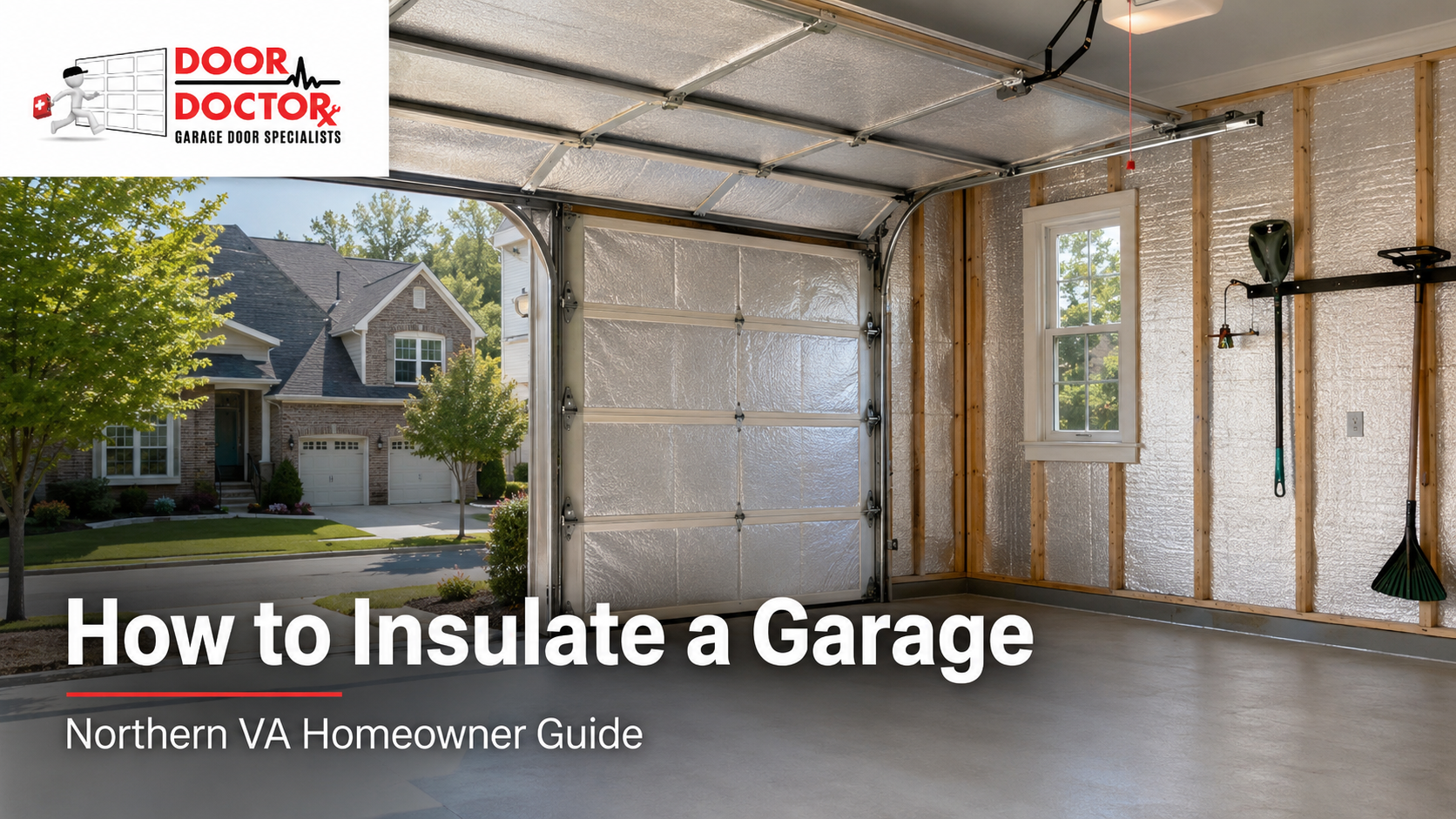
How to Insulate a Garage: A Practical Guide for Northern Virginia Homeowners
Key Notes
- Garage insulation can improve comfort, reduce drafts, and help protect tools, storage, and seasonal items
- The garage door is often one of the biggest weak points for heat loss and outside air infiltration
- Insulation works best when paired with proper weather sealing and a garage door that operates correctly
- In some cases, replacing an older door with an insulated model makes more sense than retrofitting it
- A professional inspection can help you avoid balance issues, opener strain, and wasted money on the wrong fix
Introduction
If your garage feels too hot in the summer, too cold in the winter, or constantly drafty year-round, you are not alone. Many homeowners in Northern Virginia start looking into garage insulation when the space becomes uncomfortable or starts affecting the rooms next to it.
That concern is especially common with attached garages, finished rooms above, and older doors that no longer seal well. In a climate like Northern Virginia, where humid summers and cold winters both take a toll, a poorly insulated garage can quickly turn into an energy and comfort problem.
This guide explains what insulation can realistically help with, which options make sense, and when it is smarter to repair or upgrade your garage door instead.
Why Garage Insulation Matters
Northern Virginia garages deal with constant seasonal shifts. Heat builds up fast in the summer, while cold air and drafts take over in the winter.
When insulation is lacking, outside temperatures move through the door, walls, and ceiling much more easily. This can make the garage uncomfortable, but it can also impact nearby rooms and increase the workload on your HVAC system.
For many homeowners, it is not just about comfort. It is about protecting storage, reducing outside noise, and making the garage a more usable part of the home.
How Garage Insulation Works
The goal of garage insulation is to slow down heat transfer so the space stays more stable throughout the year.
Insulation alone is not always enough. Air leaks around the garage door, worn weatherstripping, and poor sealing can still let outside air in. In many cases, sealing gaps is just as important as adding insulation.
Most upgrades focus on three areas:
Garage Door
The garage door is usually the largest weak point. Older or uninsulated doors allow heat and cold to pass through easily and often have worn seals.
Garage Walls
Walls play a key role, especially in attached garages. Insulating them helps reduce temperature transfer between the garage and the home.
Garage Ceiling
If there is a room above the garage, ceiling insulation becomes even more important for maintaining indoor comfort.
Common Garage Insulation Options
Most homeowners choose from a few practical insulation options depending on their garage setup.
Fiberglass Batt Insulation
This is a common choice for garage walls. It is affordable and effective when installed correctly, but gaps or compression can reduce its performance.
Foam Board Insulation
Foam board panels are often used for garage doors. They are lightweight and simple to install, making them a popular DIY option.
Spray Foam Insulation
Spray foam helps seal gaps and improve insulation at the same time. It works well in areas where air leakage is part of the problem.
Insulated Garage Doors
In many cases, upgrading to an insulated garage door provides better long-term results. These doors are designed for efficiency, durability, and quieter operation.
Cost Considerations
The cost depends on the size of the garage and the type of upgrade.
Basic insulation kits are the lowest-cost option but may not address sealing or door performance issues. Wall insulation and air sealing add more value but also increase cost.
If your garage door is older or already showing signs of wear, investing in an insulated replacement can often deliver better long-term results than upgrading in stages.
Common Mistakes to Avoid
One common mistake is focusing only on insulation while ignoring air leaks. Gaps around the garage door can reduce the effectiveness of any insulation.
Another issue is adding weight to the door without considering balance. Garage doors rely on springs and openers, and changes can affect how they operate.
It is also easy to invest in insulating a door that is already worn out. In those cases, replacement may be the better long-term decision.
How to Decide What Makes Sense for Your Garage
The right approach depends on how you use the space and the condition of your garage door.
If your door is newer and seals well, insulation upgrades may be enough to improve comfort. If the door is older, noisy, or unreliable, replacing it with an insulated model can provide better results.
For garages used as workspaces or storage areas, looking at insulation, sealing, and door condition together usually leads to the best outcome.
When Professional Help Makes Sense
Some insulation work can be handled on your own, but garage doors are more complex than they appear.
They rely on proper balance, spring tension, and opener performance. Adding insulation without considering these factors can lead to additional wear or operational issues.
A professional inspection can help you understand whether your current setup is worth improving or if a different solution would be more effective.
Get Help Making the Right Call
If you are still weighing your options, you do not need to figure everything out on your own.
Many homeowners start with a quick look at their garage door and sealing before deciding what to do next. Sometimes a small fix makes a noticeable difference. Other times, a more complete upgrade is the better path.
Door Doctor VA works with homeowners across Northern Virginia to evaluate garage doors, identify problem areas, and recommend practical solutions. If you want a clearer idea of what would work best for your garage, it may be worth getting a professional opinion.