
Why Is My Garage Door So Loud?
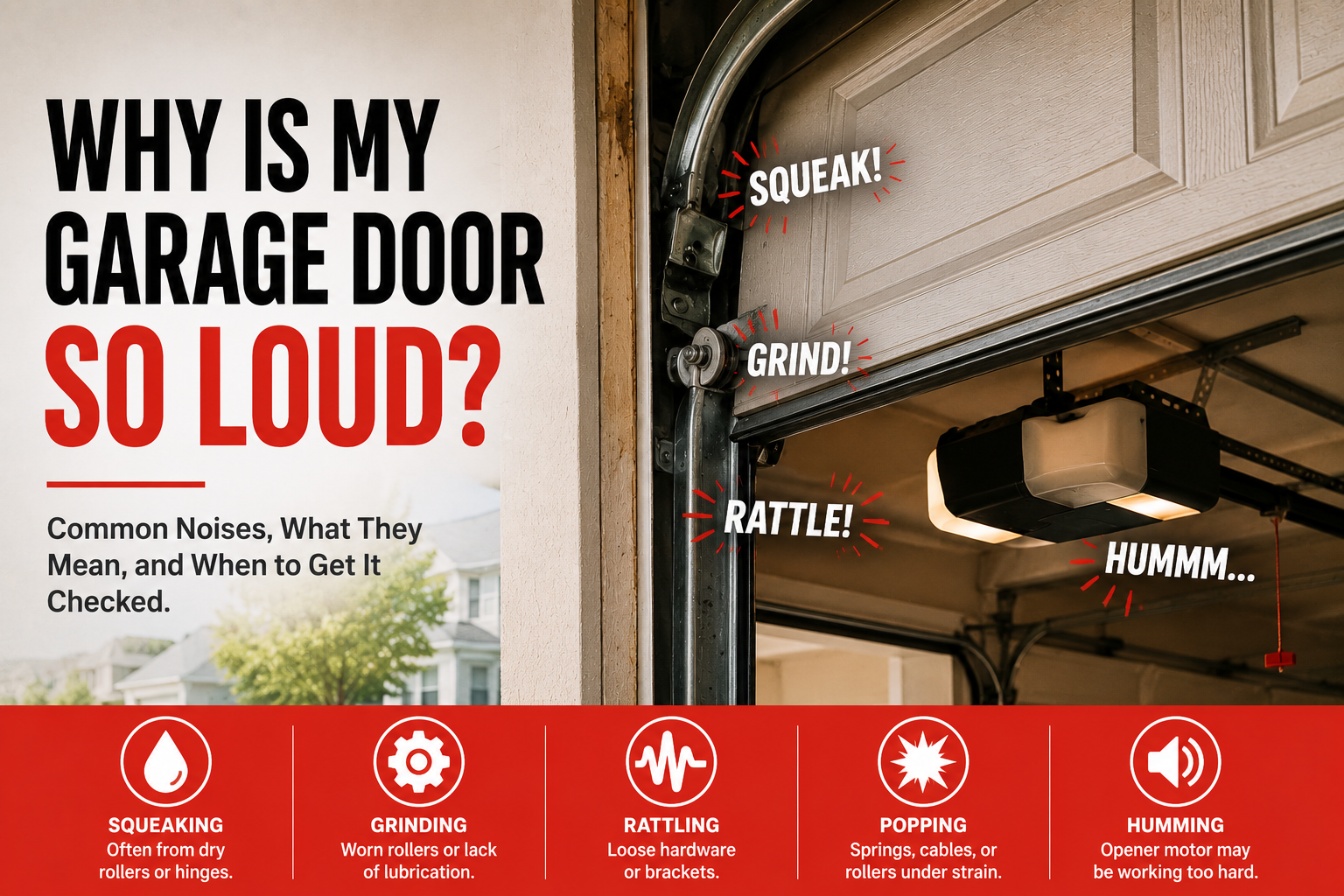
A garage door can suddenly become louder when a roller, hinge, track, spring, opener, or other moving part becomes worn, loose, dry, or damaged. Squeaking often points to rollers or hinges, rattling can come from loose hardware, and grinding or a sudden bang deserves closer attention. Manassas homeowners should pay attention not only to the sound but also to whether the door starts shaking, slowing down, moving unevenly, or struggling to open and close.
What Does the Garage Door Noise Sound Like?
Different sounds can provide useful clues about which part of the system may need attention.
| Sound | Possible Area to Check |
| Squeaking | Rollers, hinges, or other moving parts |
| Rattling | Loose hardware or vibration |
| Grinding | Roller, track, or opener |
| Loud pop or bang | Spring system |
| Humming | Opener or resistance in the door |
The sound alone cannot confirm the problem. Pay attention to when it happens, where it seems to come from, and whether the garage door changes speed or movement at the same time.
Why Is the Garage Door Squeaking or Rattling?
Squeaking commonly develops when rollers, hinges, or other moving components become dry or worn. A mild squeak with otherwise smooth movement may point to routine maintenance rather than a major mechanical problem.
Rattling can indicate loose hardware or excessive vibration somewhere in the system. If the noise becomes louder over time or the door begins shaking as it moves, the cause deserves a closer look.
Routine garage door maintenance can help identify worn or loose components before they begin affecting how the door operates.
What Does a Grinding Noise Mean?
Grinding usually means something is not moving as smoothly as it should.
A worn roller, damaged section of track, or opener working against resistance can create a grinding sound. Pay attention to whether the noise occurs throughout the entire cycle or at one specific point.
If the door grinds at the same height every time, look at the nearby track and rollers from a safe distance. Grinding combined with shaking, scraping, slowing, or uneven movement is a reason to stop repeatedly operating the door until the cause is identified.
What Does One Sudden Loud Bang Mean?
A single loud bang can be a warning sign of a broken garage door spring.
After a spring breaks, the door may suddenly become heavy, stay closed, rise only a few inches, or become difficult for the opener to move. A visible gap in a torsion spring above the door can provide another clue.
Do not repeatedly press the opener button if the door barely moves after a loud bang. Homeowners who notice these symptoms can learn more about garage door spring replacement.
Could the Noise Be Coming From the Garage Door Opener?
Yes. Not every garage door noise comes from the door itself.
Humming, clicking, grinding, or strong vibration coming mainly from the motor unit may point toward the opener. An opener can also become louder when another part of the garage door creates resistance and makes the motor work harder.
Listen to whether the noise starts above the garage or closer to the tracks, rollers, and hinges. If the opener itself appears to be the source, Door Doctor’s garage door opener repair information explains common opener problems.
Will Lubrication Make a Noisy Garage Door Quieter?
Lubrication may help when the sound comes from dry moving parts, but it will not solve every type of garage door noise.
A mild squeak may improve when appropriate moving components are lubricated according to the door manufacturer’s recommendations. Grinding, banging, a damaged roller, bent track, loose cable, or broken spring requires more than lubrication.
If the noise appeared suddenly or comes with a change in how the door moves, identify the cause before assuming lubricant is the solution.
Why Does the Door Make Noise at the Same Spot Every Time?
A noise that repeatedly happens at the same point can help narrow down the source.
A roller may be passing through a damaged section of track, a hinge may move differently at that point, or another component may be creating resistance. Watch the door from a safe distance and listen for scraping, vibration, or a noticeable change in speed.
Do not try to straighten a track or force a roller back into position while the door is moving.
When Should You Stop Using a Noisy Garage Door?
A new noise becomes more concerning when the garage door also changes how it operates.
Stop repeatedly using the door if it becomes crooked, shakes heavily, moves unusually slowly, stops partway, scrapes against the tracks, or struggles to open and close. Grinding, banging, or a loud pop followed by poor movement may indicate more than normal wear.
A mild squeak with smooth operation may be less urgent, but a sound that continues getting louder should not be ignored.
Frequently Asked Questions About Noisy Garage Doors
What Should You Do if the Noise Keeps Getting Worse?
If your garage door suddenly becomes much louder, starts grinding or banging, or changes how it moves, avoid repeatedly operating it until the source of the noise can be identified.
Door Doctor serves Manassas and surrounding Northern Virginia communities. Learn more about garage door service in Manassas or contact Door Doctor at 703-709-7933 if the noise is accompanied by shaking, uneven movement, or difficulty opening and closing.