
Why Won’t My Garage Door Close Even When the Sensors Look Aligned?
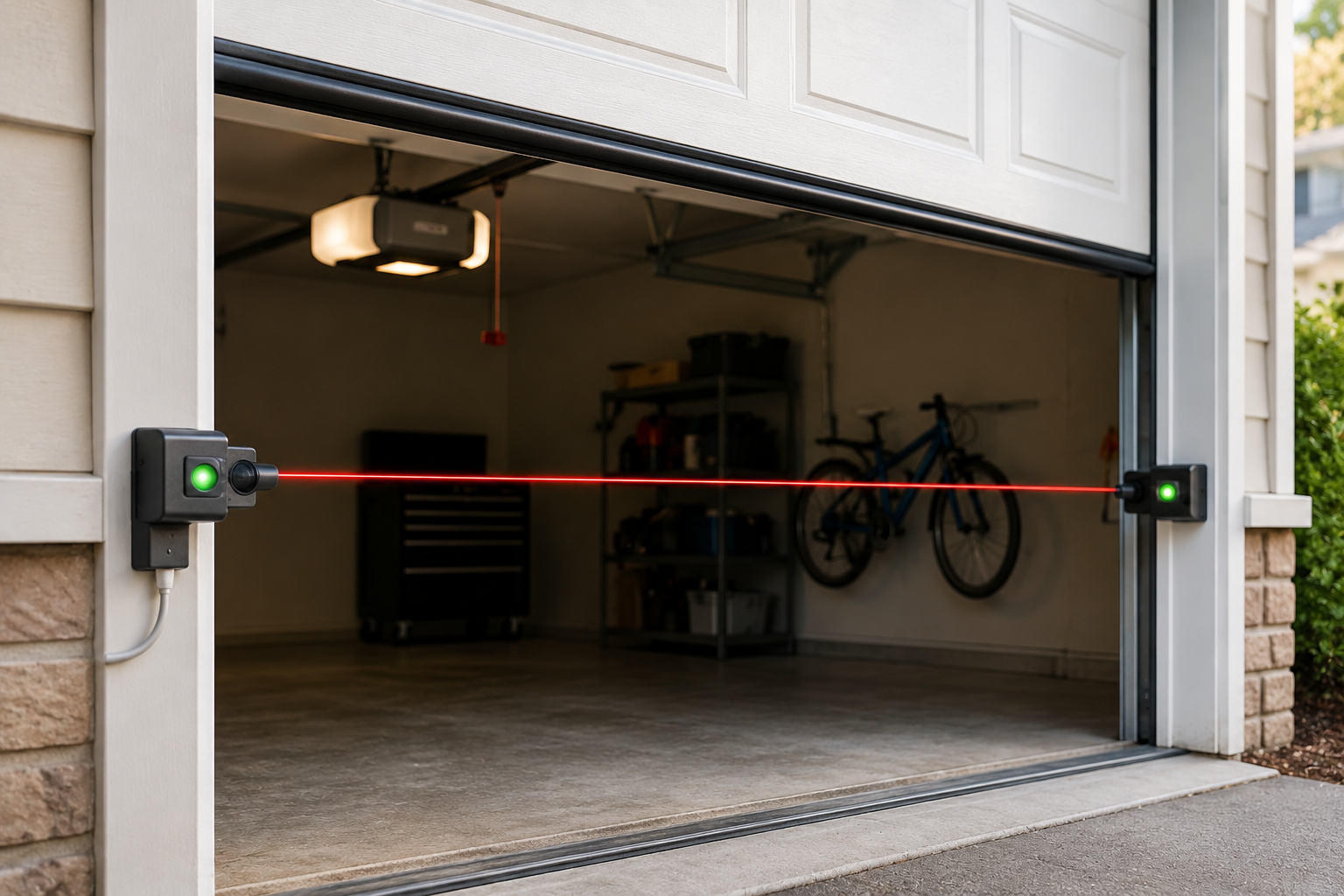
If your garage door will not close, the safety sensors may still be involved even when they appear aligned. Dirty lenses, loose wiring, direct sunlight, or a sensor that shifted slightly can interrupt the signal. If the sensors appear to be working normally, the problem may instead involve the opener settings, an obstruction, or resistance in the way the door moves. Loudoun County homeowners can start with a few safe checks before deciding whether the system needs a closer inspection.
What Should You Check First?
Start with the simple checks you can safely perform. Clear boxes, tools, leaves, toys, cobwebs, and other objects from the bottom of the garage door opening. Wipe both sensor lenses with a clean, dry cloth and make sure each sensor is firmly mounted.
Look closely at the brackets as well. A bicycle, trash can, storage bin, or lawn tool can bump a sensor without leaving it obviously crooked.
Check the indicator lights on both sensors. A blinking or flickering light may point to an alignment, wiring, or power issue. Light patterns vary by opener brand and model, so use the instructions for your specific opener before deciding what a particular light means.
Can Garage Door Sensors Look Aligned and Still Be the Problem?
Yes. Garage door safety sensors work as a pair across the bottom of the door opening. If their signal is interrupted, many openers will stop the closing cycle or reverse the door.
Visual alignment is only one part of the system. The lenses need to stay clean, the brackets must remain secure, and the wiring has to maintain a proper connection.
A sensor can look straight from across the garage while a slightly shifted bracket, dirty lens, or loose wire still prevents the system from working correctly.
What Does the Door Do When You Try to Close It?
The way the garage door behaves can provide useful clues about where to look first.
| What the Door Does | What to Check First |
| Will not start closing | Sensors, opener, wall control, or power |
| Starts down and quickly reverses | Sensor area, obstruction, or wiring |
| Almost reaches the floor and reverses | Opener travel setting or resistance |
| Closes only while holding the wall control | Safety sensor system on some opener models |
| Moves crooked or unevenly | Tracks, rollers, cables, springs, or door balance |
| Stops at the same place repeatedly | Track obstruction, door movement, or opener setting |
If the door reverses almost as soon as it starts moving, begin with the sensor system. If it travels most of the way down before reversing, pay closer attention to the opener settings and how smoothly the door moves.
These behaviors are troubleshooting clues rather than a complete diagnosis because different opener models can respond differently to similar problems.
Could a Loose Sensor Wire Cause the Problem?
Yes. Small wires connect the safety sensors to the garage door opener. A loose, pinched, cut, or damaged wire can interrupt the signal even when both sensors appear properly positioned.
Inspect only the wiring you can safely see. Look for damaged insulation, loose visible connections, or areas where shelving, tools, or storage items may have pressed against the wire.
If a sensor light flickers or changes when the bracket or visible wire moves slightly, the connection may need further inspection. There is no need to open the motor unit or pull electrical connections apart during basic troubleshooting.
Can Sunlight Affect Garage Door Safety Sensors?
Yes, direct sunlight can interfere with the receiving sensor on some garage door opener systems.
Timing can provide a clue. A garage door may operate normally earlier in the day but have trouble closing when afternoon sunlight reaches one sensor. If the problem repeatedly happens at a similar time on sunny days, sunlight may be contributing to the interruption.
Do not cover, disconnect, or bypass the safety sensors. If sunlight appears to be involved, check the manufacturer’s instructions for the opener or have the sensor setup inspected.
What If the Sensors Seem to Be Working Normally?
If the lenses are clean, the brackets are secure, and the sensor lights appear normal for your opener model, watch how the door moves from a safe distance.
Shaking, scraping, uneven travel, or stopping at the same point can indicate that the problem is not the sensors. A garage door roller may catch near a damaged section of track, or another moving component may be creating resistance.
If one side of the door sits lower or moves differently from the other, a cable, spring, roller, track, or another part of the lifting system may be involved. Repeatedly adjusting or replacing sensors will not correct a mechanical problem elsewhere in the door.
Could the Garage Door Opener Settings Be Wrong?
Yes. Garage door openers use travel settings to control how far the door moves before stopping.
If the closing travel is set incorrectly, the door may stop before reaching the floor or touch the floor and reverse. Adjustment procedures vary by opener brand and model, so use the manufacturer instructions for your specific unit rather than guessing at the settings.
Avoid increasing opener force simply to make a door close. If the door is encountering resistance, additional force does not correct the underlying problem.
Homeowners dealing with persistent opener problems can learn more about garage door opener repair.
When Should You Stop Troubleshooting?
Cleaning the sensor lenses, clearing the doorway, checking the brackets, and inspecting visible wiring are reasonable homeowner checks. Stop troubleshooting when the problem appears to involve the lifting or mechanical parts of the door.
Do not continue operating a door that is crooked, off track, unusually heavy, or moving roughly. A loose cable, damaged spring, or loud bang followed by difficulty opening or closing the door can indicate a more serious problem.
Garage door springs and cables can remain under significant tension. Do not loosen, adjust, remove, or attempt to repair these components yourself. Stop using the door until the affected parts can be inspected.
Why Is It Important to Find the Actual Cause?
A garage door that will not close does not automatically need new safety sensors. Similar symptoms can come from sensor alignment, wiring, opener settings, track problems, worn components, or resistance in the door.
Start with the basic checks and pay attention to exactly how the door behaves. Identifying the pattern can help narrow down the cause and avoid replacing a component that is still working correctly.
Frequently Asked Questions About Garage Doors That Won’t Close
What Should You Do If the Garage Door Still Won’t Close?
If you have cleaned the lenses, cleared the opening, checked the brackets, and inspected the visible wiring but the door still will not close, the problem may involve the sensor system, opener, or the movement of the garage door itself.
Door Doctor serves Loudoun County and surrounding Northern Virginia communities. If the basic checks do not identify the problem, contact Door Doctor or call 703-709-7933 to have the sensors, opener, and door movement inspected.